



Emergency Fund: How Much to Save and Where to Keep It
Financially protected against all contingencies
Almost everyone has heard of an emergency fund, but do you know where the idea comes from? The German term, “Notgroschen”, dates back to the 16th century, when a far-sighted ruler had a special coin minted, the “Notpfennig”, and required all of his subjects to keep one as a reserve for hard times. The pfennig later became a groschen, giving us the word “Notgroschen”.
Today, an emergency fund is a financial cushion set aside to cover unexpected expenses.
This guide explains the best ways to build an emergency fund, why a financial reserve matters and how much you need.
The essentials in brief: Everything You Need to Know About Your Emergency Fund at a Glance
What: An emergency fund is a financial reserve set aside for unexpected costs, such as repair bills, sudden unemployment or other financial emergencies.
How much: Experts recommend saving the equivalent of three to six months' net salary, or three to six months' essential outgoings.
How: Keep your emergency fund safe and easy to access at short notice. An easy-access savings account is a good option because your money is readily available.
Why: Building an emergency fund is an essential step towards financial security and a solid foundation on the path to financial freedom.

Find and compare thousands of ETFs. Use powerful filters, detailed analytics, and independent data to discover the right ETF for your portfolio.
In a nutshell: What is an emergency fund?
An emergency fund, sometimes called a rainy-day fund or nest egg, is a financial cushion that everyone should have. It’s a reserve you can reach at any time, held safely in an account and well worth saving for, to help you through emergencies. Whether it’s an unexpected car repair, a sudden illness or job loss, an emergency fund means you’re prepared for such surprises.
Why You Should Have a Rainy-Day Fund
An emergency fund is designed for exactly these situations. It works like insurance against financial emergencies. With enough savings, you can avoid taking out expensive loans and go about your life with greater peace of mind, knowing that you’re prepared. However, it’s important to use this money only for genuine emergencies, not everyday expenses.
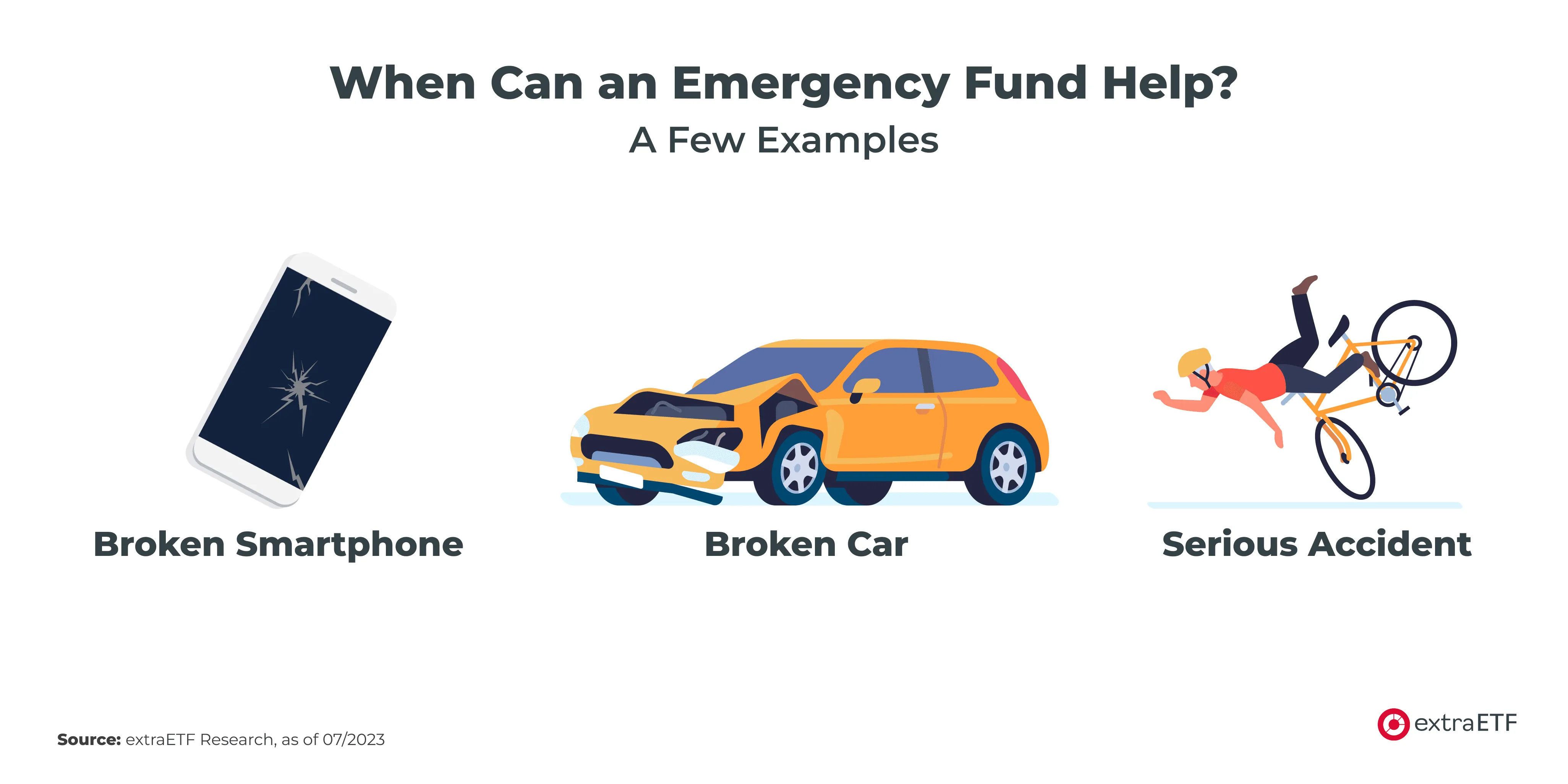
Imagine coming home to find that your washing machine has broken down, or your car failing just when you need it most. Or you might suddenly face high costs because of a family emergency. Unexpected expenses like these can quickly become a financial burden if you have no reserves.
The image below shows more situations in which an emergency fund can help:
Join the extraETF community
Explore the world of ETFs and make informed investment decisions.
- Find ETFs that match your criteria with our ETF Search.
- Compare costs, performance, and risk side by side.
- Save your favourites to a watchlist and receive price alerts.
- Explore detailed ETF profiles with key metrics and holdings.
Amount of reserves: How much should your emergency fund be?
The right amount varies from person to person and depends on several factors. As a general guideline, experts recommend setting aside three to six months' net salary, or the equivalent of your essential monthly outgoings.
How much you need therefore depends on factors such as your family situation, your financial commitments and how secure your job is. For example, if you have a family or are paying off a mortgage, you should aim for a larger emergency fund.
As a rule of thumb, three months’ net salary should cover most short-term financial emergencies. Six months’ net salary offers greater security, especially if you have a family or your job isn’t secure.
There are various ways to save up for your emergency fund. Here are a few strategies to help.
Percentage of income: Set aside a fixed percentage of your net income. The amount will depend on your financial situation, but even a small percentage adds up over time. |
Extra income and cash gifts: Put extra income, such as bonuses, tax refunds or cash gifts, towards your savings. |
Cut back on spending: Review your budget and identify areas where you can cut back. The 50-30-20 rule can serve as a guide. You can then put the money you save into your emergency fund. |
“Pay yourself first”: This well-known savings strategy means moving a portion of your income into savings as soon as you are paid, before spending on anything else. Setting up a standing order to your savings account makes this automatic. |
Budget surpluses: If you have money left over at the end of the month, add it to your savings rather than spending it. |
Where should you keep your emergency fund?
As a general rule, your emergency fund should be kept safe, easily accessible and available at short notice. An easy-access savings account is a good option, as it generally pays higher interest than a current account while still allowing quick access. Deposits with UK-authorised banks and building societies are also protected by the FSCS up to £85,000 per person, per institution. Avoid putting your emergency fund into risky investments – the money should be safe and easy to reach when you need it.
Interest rates on easy-access accounts are often low, but the main purpose of an emergency fund isn’t to generate a return or offset inflation – it’s to provide security and availability when you need it.
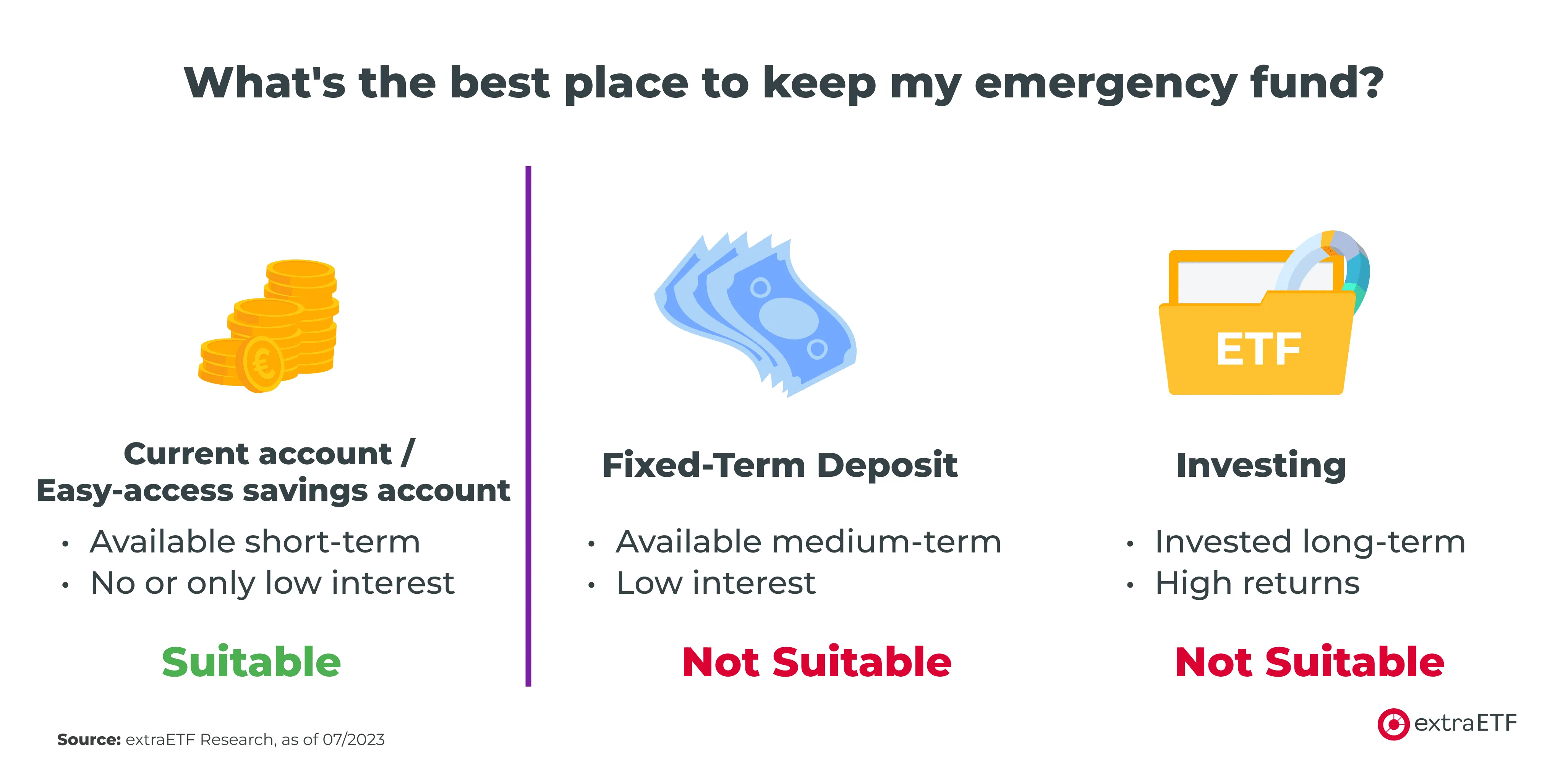
Here’s an overview of where you could keep your emergency fund:
Current account: A current account offers quick access to your money and security, making it suitable for an emergency fund. The downside is that it usually pays little or no interest. Also, your emergency fund isn’t separate from the rest of your money, so you may be tempted to spend it.
Easy-access savings: An easy-access savings account offers a good combination of security and accessibility. You can reach your money at any time and it earns some interest, making it the best option for holding your emergency fund.
On the other hand, the following are not suitable for your emergency fund:
Fixed-rate savings accounts: A fixed-rate savings account is an option if you’re willing to tie up your money for a set period. You’ll generally earn higher interest than with an easy-access account, but your money is locked away, which makes it unsuitable for an emergency fund. It’s better suited to medium-term goals, such as a major purchase, because over the long term it usually can’t keep pace with inflation.
ETFs: ETFs are low-cost, transparent, and offer a wide range of investment opportunities. They’re well suited to long-term wealth building, offering growth potential and, in many cases, regular dividend payments. Over the long term, ETFs also offer a good chance of keeping pace with inflation. However, their value can fall at short notice, so they aren’t suitable for an emergency fund.
The chart below illustrates the different options for holding your emergency fund:
Conclusion: A nest egg as a safety net
An emergency fund is an essential part of personal financial planning. By building such a reserve, you gain greater financial freedom and security. How much you need depends on your circumstances, but it should generally be three to six months’ net salary. It can be tempting to dip into your emergency fund for non-essential spending, but use it only for genuine emergencies and replenish it as quickly as possible.
It’s also worth reviewing your finances regularly. A portfolio tracking tool lets you monitor and analyse your investments quickly and easily as part of your financial planning.
We'll answer any other questions you may have about your emergency fund
- Everything You Need to Know About Your Emergency Fund at a Glance
- In a nutshell: What is an emergency fund?
- Why You Should Have a Rainy-Day Fund
- Amount of reserves: How much should your emergency fund be?
- Where should you keep your emergency fund?
- A nest egg as a safety net
- We'll answer any other questions you may have about your emergency fund
