









How the Stock Comparison Works
Compare and analyze the best stocks for your portfolio.
Stocks offer you the opportunity to invest in companies and benefit from their financial performance in the form of dividends and price appreciation.
Before investing in stocks, you should thoroughly understand the company and its business model and analyze key metrics such as the price-to-earnings ratio, earnings growth, and dividend yield in advance.
With extraETF’s stock comparison tool, you can compare different stocks side by side based on key metrics. Below, we’ll explain how to get the most out of the stock comparison tool.
Why is it important to compare stocks?
Comparing stocks is important for evaluating their performance, risk, and key metrics. This allows you to identify the stocks that best align with your return goals and investment strategy while also presenting an acceptable level of risk. You can also compare key metrics such as the dividend yield or the price-to-earnings ratio (P/E ratio) of different stocks to make informed investment decisions.
Furthermore, a stock comparison allows you to:
- Performance: Compare the price performance of different stocks over various time periods.
- Dividend yield: Comparing dividend yields helps you identify stocks with attractive dividends.
- Key Metrics: Compare metrics such as P/E ratio, market capitalization, or earnings per share to gain insights into a company’s financial strength and profitability.
- Sector analysis: To diversify risk, you can identify differences between stocks in various sectors and industries.
- Risk: Assess price performance, volatility, and potential drawdowns.
- Fees and Costs: Consider transaction costs, savings plan fees, or custodial fees charged by providers.
How does the stock comparison work?
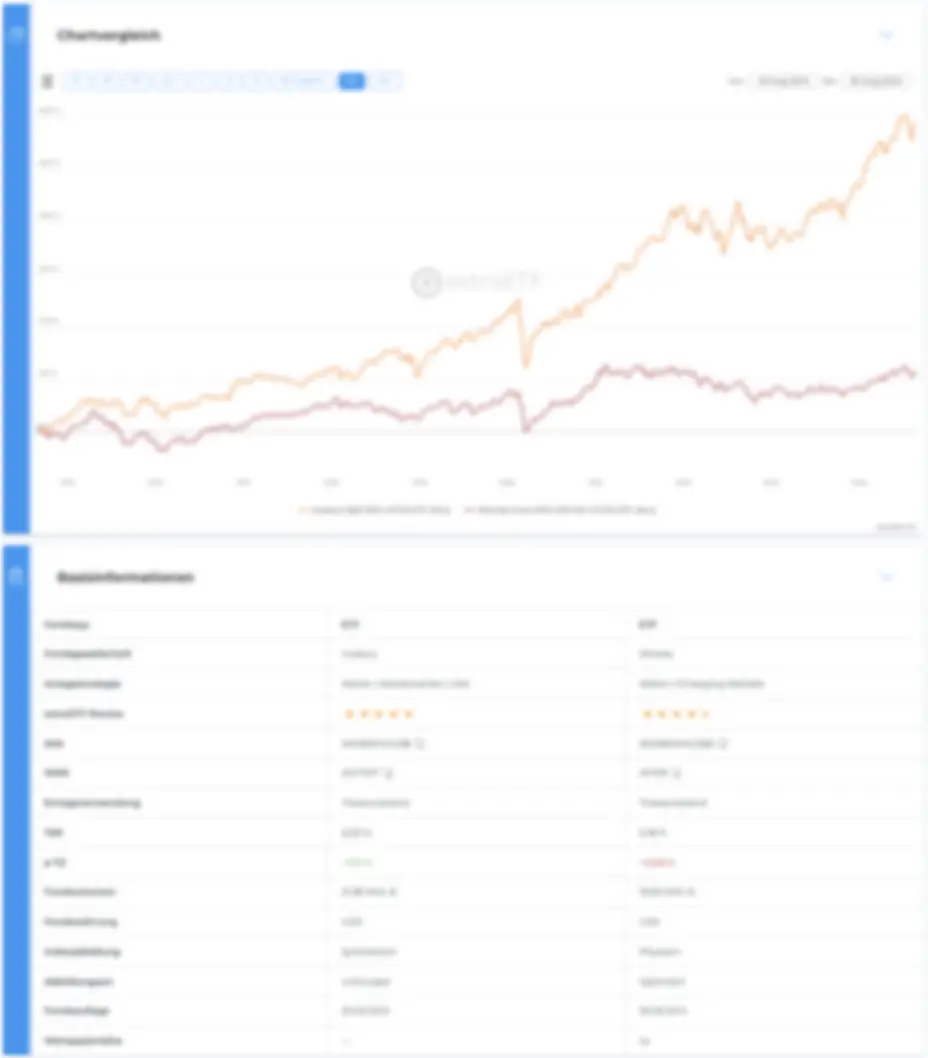
The Stock Comparison feature provides a comprehensive overview of up to four stocks at once. With a graphical representation of performance in a chart comparison, key basic data such as ISIN, industry, and market capitalization, as well as relevant information on dividend history, it presents all the important facts at a glance. In addition, key metrics make it easier to evaluate and select the best stocks for your investment strategy. Ideal for structured and efficient decision-making when selecting stocks.
Create a comprehensive stock analysis and gain detailed insights that help you build a solid foundation for making informed decisions about your portfolio.
Did you know? In addition to our stock comparison tool, we also offer an ETF comparison tool that lets you compare ETFs and even actively managed funds. In the ETF comparison tool, simply enter the ISIN of the ETF or actively managed fund into the search bar. You can then compare ETFs with each other, as well as with actively managed funds.
Diversification, Investment Strategy, and Asset Allocation
Successful stock investing requires a well-thought-out strategy in which diversification, investment strategy, and a balanced asset allocation are crucial for minimizing risk and achieving stable long-term returns. One good way to combine ETFs and stocks is, for example, the core-satellite strategy.
The following topics are particularly important in this context:
- Diversification: Spreading your investments across different sectors, regions, and companies reduces the risk associated with stock investing. The right ETFs and stocks can together provide broad diversification and are well-suited for long-term savings plans.
- Investment Strategy: Your investment strategy should be based on your individual goals, your risk tolerance, and your desired investment horizon.
- Asset Allocation: Allocating your investments across different asset classes—such as stocks, real estate, commodities, or bonds—can create a balanced risk-reward ratio.
Check out our in-depth articles on this topic.
Conclusion: The stock comparison tool helps you choose stocks
Stock comparisons are particularly helpful for selecting the best stocks. Through a structured analysis—ranging from graphical performance in chart comparisons to detailed basic information such as region, industry, ISIN, and market capitalization, all the way to key financial ratios—investors gain a comprehensive overview. Dividend yield, dividend growth, and metrics such as P/E ratio or P/B ratio also play a key role.
The stock comparison not only helps you analyze and evaluate stocks that align with your investment strategy and goals, but also helps you identify potential risks early on and efficiently optimize your portfolio. This systematic comparison provides you with the best possible support in selecting stocks and can simplify your decision-making process when deciding whether or not to make an investment.
Important Questions About Comparing Stocks
Affiliate notice *
Links marked with an asterisk (*) are advertising or affiliate links. If you purchase or sign up through this link, we receive compensation from the provider. This comes at no additional cost or disadvantage to you. We use this revenue to fund our free services. Thank you for your support.