How Big Is the Risk with ETFs, Really?
Everything You Need to Know About the Safety of Exchange-Traded Index Funds

ETFs are an increasingly popular financial product – and for good reason. These exchange-traded index funds are low-cost, transparent, and offer the potential for high returns.
However, investors should keep in mind that investing in the stock market always involves a certain amount of risk. Before you invest your money, you should therefore consider the risks associated with ETFs and align them with your individual investment strategy and risk tolerance.
We’ll show you how safe ETFs are, how to assess the risks, and how to prevent potential losses.

The essentials in brief: ETF Risks at a Glance
Definition: ETFs are index funds that are traded on the stock exchange. They track an index as closely as possible, ideally on a 1:1 basis.
Risk: As a stock market investment, ETFs are subject to certain risks. These include general market risk, which arises from the volatility of the stock market. In addition, there is exchange rate risk and, in the case of swap ETFs, counterparty risk.
Investor Behaviour: Investor behaviour can also influence the risk associated with ETFs. You can reduce this risk by not immediately selling your investment during short-term price drops.
Risk: Because of their diversification, ETFs carry less risk than individual stocks. A broadly diversified, long-term investment strategy can help reduce the risk associated with ETFs.

Find and compare thousands of ETFs. Use powerful filters, detailed analytics, and independent data to discover the right ETF for your portfolio.
Risk: How safe are ETFs?
Stock prices are subject to constant fluctuations. Like any stock market investment, ETFs are therefore not risk-free. However, compared to other investment vehicles such as individual stocks, ETFs carry a lower level of risk. Since exchange-traded index funds track an index and thus contain many different individual securities, the investment risk is automatically diversified.
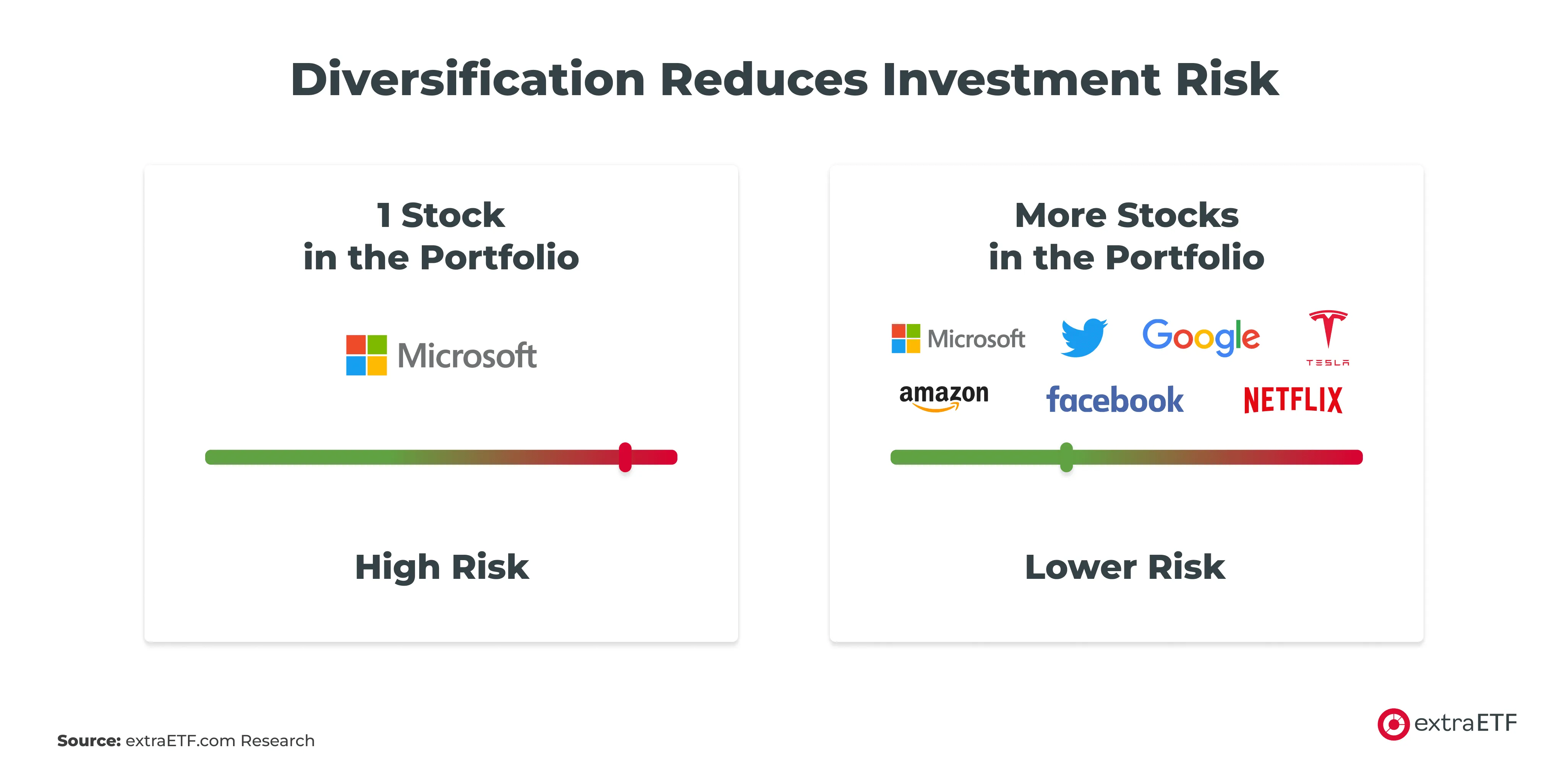
If one of the underlying securities loses value, the others can often offset that loss over time.
The money invested in ETFs is also treated as a separate fund. This means that your invested money is held separately from the fund company’s assets. If the fund company has to file for bankruptcy, your investment is protected. The same applies if the depositary becomes insolvent.

ETFs are not without risk, but unlike other forms of investment, they are protected against various scenarios.
ETF investors should be aware of these risks
You should be aware of these ETF risks:
ETFs spread your money across hundreds, and often even thousands, of securities. This way, losses from a single security can be offset by gains from many others. A diversified fund can therefore help you invest with less risk. Nevertheless, investors should be aware of the risks associated with investing in ETFs.

Risk is a part of life – even when it comes to investing
 Martin Vogt, Education & Content Manager
General Market Risk
General market risk encompasses all economic factors that could have a negative impact on the markets. These include natural disasters, political changes, or crises such as the COVID-19 pandemic. Since the value of an ETF depends directly on the performance of the underlying index, fluctuations in the stock market also have a direct impact on index funds.
Market risk affects all investors equally and cannot be avoided. Only through a long-term investment strategy can you attempt to offset market risk and thereby reduce it.


Join the extraETF community

Explore the world of ETFs and make informed investment decisions.
- Find ETFs that match your criteria with our ETF Search.
- Compare costs, performance, and risk side by side.
- Save your favourites to a watchlist and receive price alerts.
- Explore detailed ETF profiles with key metrics and holdings.
Currency Risk
ETFs that are not traded in the local currency are subject to currency risk. For example, the securities in the MSCI World Index are denominated in U.S. dollars. Unfavorable exchange rates can wipe out ETF gains. Conversely, however, exchange rates can also present an opportunity.
Example: Let’s assume the U.S. dollar is weak against the British pound. Your U.S. stocks will therefore lose value – measured in pounds – even if the market prices of the USD-denominated investments are rising.
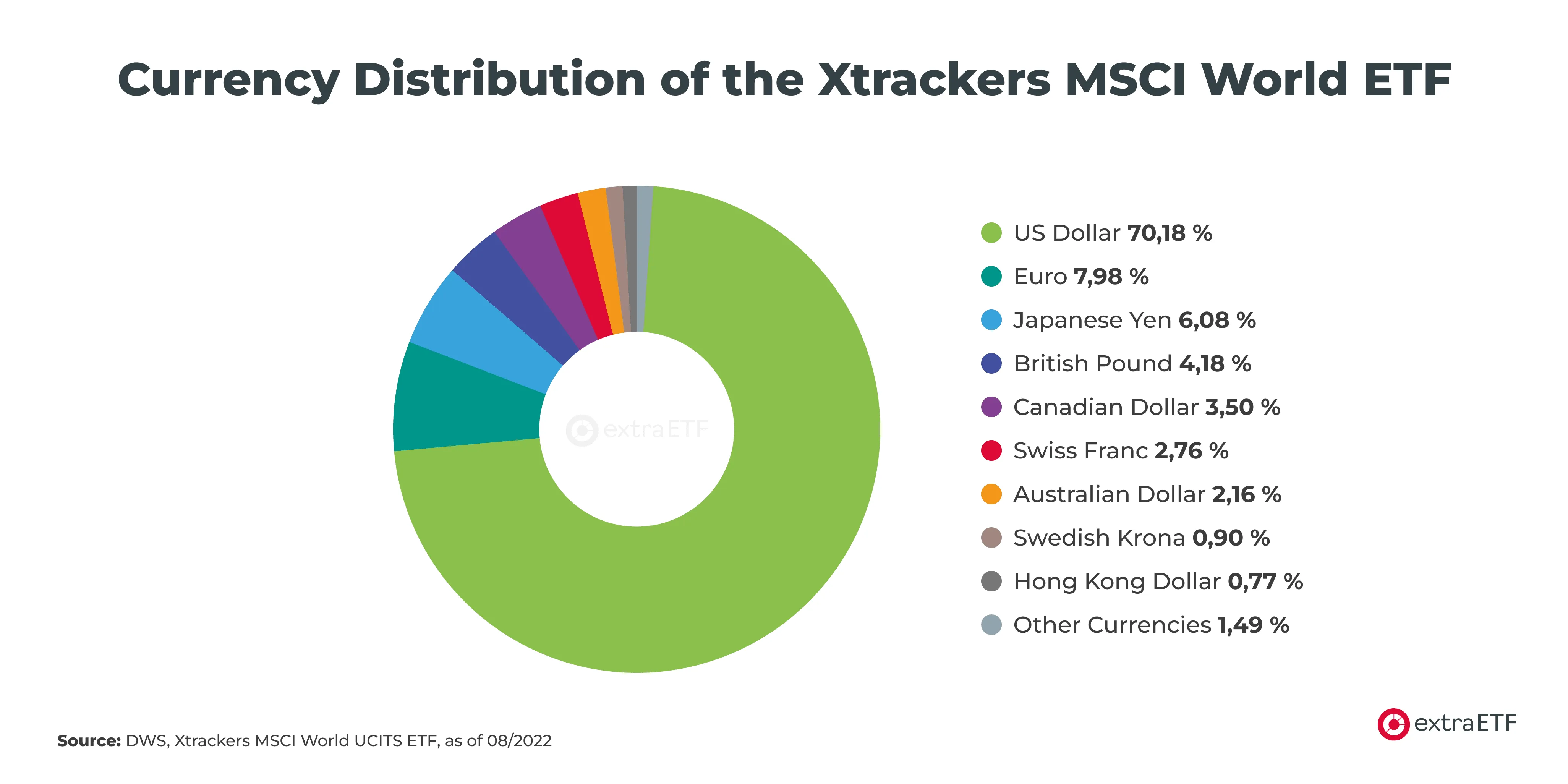
To minimise exchange rate risk, some ETFs use derivatives (currency hedging). This is intended to automatically hedge the portfolio’s value against currency fluctuations. However, the providers of these ETFs charge an additional 0.1–0.3 per cent per year for the hedging. If you’re aiming for a long-term investment of 10 years or more with your ETF, you can generally do without this protection. If currency fluctuations occur, they usually even out over this long period.
Counterparty Risk in Swap ETFs
While physical ETFs purchase exactly the securities included in the respective index, synthetic ETFs – also known as swap ETFs – may also contain other securities. The underlying benchmark index is replicated through a swap transaction with a financial institution. The swap counterparty guarantees the potential returns, which means the ETF is dependent on the counterparty fulfilling its obligations.
Because of this approach, synthetically replicated ETFs are subject to what is known as counterparty risk. If the swap partner can no longer meet its obligations, investors may incur losses. If the swap partner files for bankruptcy, approximately 90 per cent of the invested funds are legally protected – but the remaining 10 per cent are not. Investors therefore face the risk of losing a portion of their invested funds.
If you'd like to learn more about the difference between physical and synthetic ETFs, you can check out our guide here.
Liquidity Risk
If there is a sharp market downturn, many investors tend to react hastily and want to sell their ETF shares as quickly as possible. If there aren’t enough buyers in this scenario, a liquidity crunch can occur. Critics warn that, in the worst-case scenario, this could lead investors to try to sell other assets as quickly as possible as well.
However, the past few decades have repeatedly shown that stock prices recover. A hasty sale of ETF shares offers no advantages. That is why it is important to plan for an investment horizon of at least 15 years when investing in ETFs. This allows any losses on the ETFs to be offset over time.
Is there a risk posed by the market power of ETF providers?
When comparing ETF providers, you’ve probably already noticed that the market is dominated by a few large providers. The largest ETF providers in Europe are iShares, a brand of the U.S. asset manager BlackRock, Amundi, and Xtrackers from DWS Investment. They are followed by UBS, Vanguard, Invesco, State Street, and WisdomTree. In some niche areas, such as smart beta, there are other smaller providers as well.
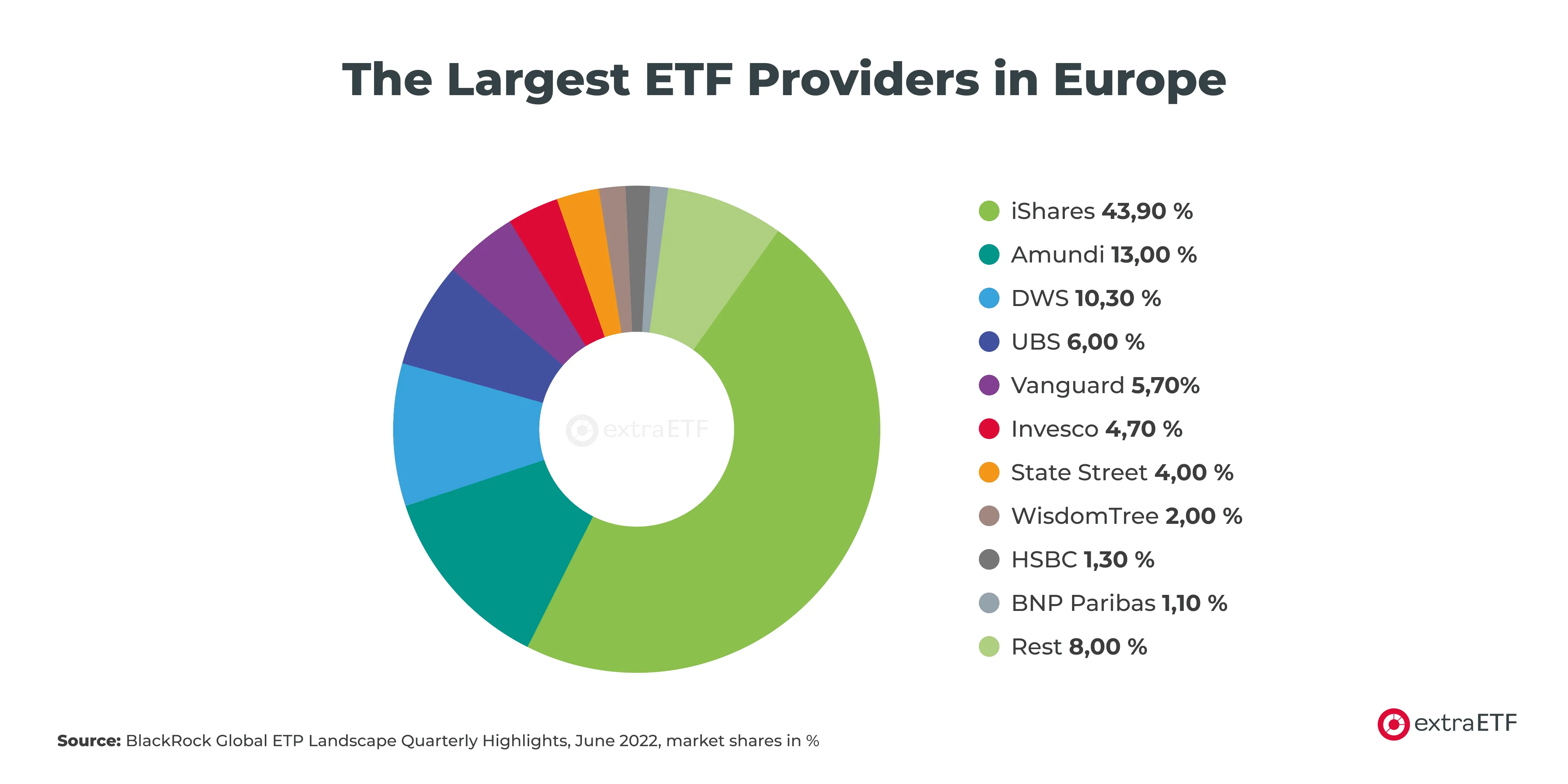
Critics frequently express concerns about a monopoly and a resulting increase in ETF costs. So far, however, there are no signs that the concentration on a few providers has had a negative impact on investments.
Beware of False Marketing Promises
New providers find it difficult to establish themselves in the ETF market, as it is dominated by just a few providers. To stand out, some providers try to lure investors with exceptionally high returns. In most cases, however, these high returns come with a high risk of loss. Beginners to ETFs, in particular, should therefore focus on established funds at first.
As a general rule, it is assumed that a fund can only be economically viable once its assets under management reach approximately 50 million euros. Therefore, investors should definitely check the ETF’s assets under management before making an investment.
If you'd like to know which ETF is right for you and your investment strategy, take a look at our ETF recommendations.
ETF Risk Due to Investor Behaviour
Risks associated with ETFs do not arise solely from performance and price movements on the stock market. Investor behaviour can also have a negative impact on the investment. In general, ETFs are suitable exclusively for long-term investment. They are less suitable as short-term investments.
If a large number of investors sell their shares when prices are falling, this can contribute to a downward trend in the stock market. This “herd behaviour” thus increases the risk of losses for all ETF investors. Therefore, a long-term investment strategy is advisable to offset short-term losses.

Conclusion: Is it possible to reduce the risk associated with ETFs?
Like any investment, ETFs also carry certain risks for investors. However, that shouldn’t be a reason to avoid this type of investment – quite the opposite. The potential returns here are significantly higher than with conservative investment options.
The key here is to adopt a long-term investment strategy. With an investment horizon of at least 15 years, ETFs can be considered a low-risk investment – provided that investors do not sell immediately when prices fall. If you consistently stick to your investment strategy, any potential losses can be offset over time.
To reduce the risk associated with ETFs, you should therefore:
- diversify your investments
- pursue a long-term investment strategy
- be wary of marketing gimmicks and focus on funds that have been on the market for some time
- choose funds with sufficient assets under management
- educate yourself thoroughly in advance about potential ETF risks