Personal Pension Planning: Securing Your Retirement
Start early to maintain your standard of living in retirement

Many people in the UK rely on the State Pension for their retirement. However, it is unlikely to be enough on its own to maintain your standard of living in later life because of the pension gap. That is why personal pension planning is becoming increasingly important alongside the State Pension and workplace pensions. For those with many years until retirement, it offers a wide range of ways to close the gap. But what options are available? Do they offer good returns at low risk, and are they a sound choice?
In this guide, we answer these questions and more, looking closely at the main options for personal pension planning and their pros and cons.

The essentials in brief: Personal Pension Planning at a Glance
Definition: Personal pension planning is an individual financial plan for retirement that relies on a high degree of personal responsibility. Alongside the State Pension and workplace pensions, it is essential for maintaining your standard of living in retirement.
Options: There are many ways to save for retirement privately. These include workplace pensions, SIPPs, insurance-based pension plans, endowment policies and Stocks and Shares ISAs, as well as regular ETF investing and regular fund investing.
Costs, returns and taxes: Assess every option on costs, returns and tax. Each has a decisive impact on how much retirement income you end up with.

Find and compare thousands of ETFs. Use powerful filters, detailed analytics, and independent data to discover the right ETF for your portfolio.
Definition: What is personal pension planning?
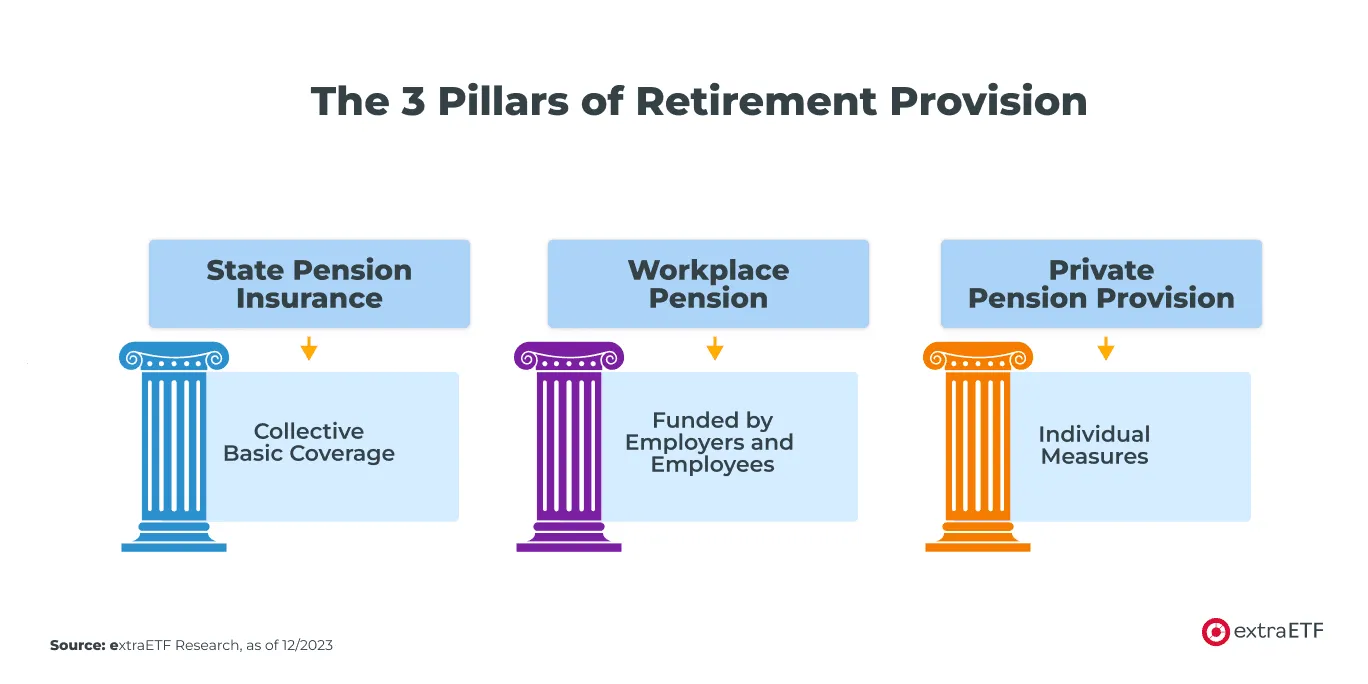
Personal pension planning is the third pillar of the three-pillar model of retirement planning, alongside the State Pension and workplace pensions. Its goal is to build up enough assets to maintain your accustomed standard of living once you retire. It relies largely on individual responsibility.
The following chart provides an overview of the three-pillar model of retirement planning, in which personal pension planning plays an essential role in closing the pension gap:
Why is personal pension planning a good idea?
Personal pension planning is both sensible and essential, as the State Pension alone will not be enough to close the pension gap and maintain your standard of living in retirement. The main reasons are demographic change and rising life expectancy. Personal pension planning is also a wise choice because you can tailor it flexibly to your own circumstances.
If you still have many years until retirement and can regularly set aside an amount for your pension, compound growth can build a substantial pot for later life. This assumes you choose low-risk options that are expected to deliver strong returns and growth over the long term, such as suitable ETFs.
Options for Personal Pension Planning
Examples of personal pension planning options include:
- Workplace pension (auto-enrolment)
- SIPP (Self-Invested Personal Pension)
- Insurance-based pension plan
- Endowment policy
- Regular fund investing and ETFs
- Stocks and Shares ISA
Note: None of these options is right for everyone. Before making any decision about retirement savings, thoroughly evaluate the advantages and disadvantages of each option and decide whether it suits your situation.
Before we weigh up the pros and cons of each approach, let’s look at each option in more detail.

Be mindful of the costs, potential returns, and risks
 Martin Vogt, Education & Content Manager
How much should you save each month for your personal pension?
How much you should save and invest each month depends on many factors, including your financial situation, the type of investment, your investment horizon, the rate of return, any existing pension provision, the standard of living you want in retirement, inflation and taxes. Our article on the pension gap explains everything you need to know, while the extraETF pension gap calculator can help you work out the size of your own gap.
A solid grasp of finance is essential for personal pension planning. Our ETF Guide, among other resources, covers everything you need to know about investing with ETFs.
Join the extraETF community

Explore the world of ETFs and make informed investment decisions.
- Find ETFs that match your criteria with our ETF Search.
- Compare costs, performance, and risk side by side.
- Save your favourites to a watchlist and receive price alerts.
- Explore detailed ETF profiles with key metrics and holdings.
Advantages and Disadvantages of Various Personal Pension Planning Plans
Each personal pension option has its own advantages and disadvantages, which you should weigh carefully against your circumstances and finances to find the plan that best suits your needs. Please note that the points below are not exhaustive. Many investment options also come in specialised forms and product variations, each with its own characteristics.

Benefits of Personal Pension Planning
| Types of Personal Pension Plan | Advantages |
|---|---|
| Workplace Pension (Auto-Enrolment) |
|
| SIPP |
|
| Insurance-Based Pension Plan |
|
| Endowment Policy |
|
| Regular Fund Investing & ETFs |
|
| Stocks and Shares ISA |
|

Disadvantages of Personal Pension Planning
| Types of Personal Pension Plan | Disadvantages |
|---|---|
| Workplace Pension (Auto-Enrolment) |
|
| SIPP |
|
| Insurance-Based Pension Plan |
|
| Endowment Policy |
|
| Regular Fund Investing & ETFs |
For more detailed information, see our article on the difference between ETFs and actively managed funds. |
| Stocks and Shares ISA |
|

Conclusion: Why Personal Pension Planning Are Important
Today, personal pension planning has become indispensable alongside workplace pensions, as the State Pension alone is not enough to maintain your standard of living in later life. There are many options – including workplace pensions, SIPPs, insurance-based pension plans, Stocks and Shares ISAs, ETFs and endowment policies – and each has its own advantages and disadvantages.
When choosing a personal pension plan, always assess carefully how well it suits you and your situation. Don’t let tax benefits blind you; instead, pay close attention to costs, risks and overall return. After all, once you start drawing your pension, what really matters is having enough income to close your pension gap.
Among all the options, long-term investment in sufficiently diversified global equity ETFs is an excellent choice for your retirement savings. They offer low costs and high potential returns, with lower risk thanks to broad diversification. A regular ETF investment plan makes particular sense if you still have many years or decades until retirement and can invest each month. With the extraETF regular investing calculator, you can run sample scenarios in advance, and in our comparison of regular ETF investment plans you’ll find the one that best suits you and your situation.
We're here to answer any other questions you may have about private retirement planning

- Personal Pension Planning at a Glance
- Definition: What is personal pension planning?
- Why is personal pension planning a good idea?
- Options for Personal Pension Planning
- How much should you save each month for your personal pension?
- Advantages and Disadvantages of Various Personal Pension Planning Plans
- Why Personal Pension Planning Are Important
- We're here to answer any other questions you may have about private retirement planning