



ETFs vs. ETCs: What's the Difference?
Should I invest in ETFs or ETCs?
Products such as ETFs (exchange-traded funds) and ETCs (exchange-traded commodities) can be an attractive way to diversify a portfolio, as they give investors access to a range of asset classes. Both are traded on the stock exchange, but each has its own characteristics.
But what exactly are ETFs and ETCs? What are the differences between them? And what risks are associated with each?
This guide explains how ETFs work and how ETCs let you invest in commodities and precious metals. We set out the differences between them to help you make an informed decision and minimise risk.
The essentials in brief: Everything You Need to Know About ETFs vs. ETCs
ETFs: ETFs (Exchange-Traded Funds) are index funds traded on the stock exchange. They passively track the performance of an underlying index, such as the DAX. ETFs offer broad diversification in a cost-effective and transparent way.
ETCs: ETCs (Exchange-Traded Commodities) are exchange-traded securities whose value is linked to the performance of commodities. They allow investors to invest in individual commodities and precious metals, such as gold.
Security: Unlike ETCs, ETFs are classed as segregated funds, which means that the invested capital is protected if the provider becomes insolvent. ETCs, on the other hand, are debt securities. If the issuer becomes insolvent, investors may recover only part of their money, or none at all.
Difference: ETFs cannot track a single underlying asset, whereas ETCs can. An ETC can follow one commodity, while ETFs can also cover other asset classes, such as shares, and always hold multiple assets.

Find and compare thousands of ETFs. Use powerful filters, detailed analytics, and independent data to discover the right ETF for your portfolio.
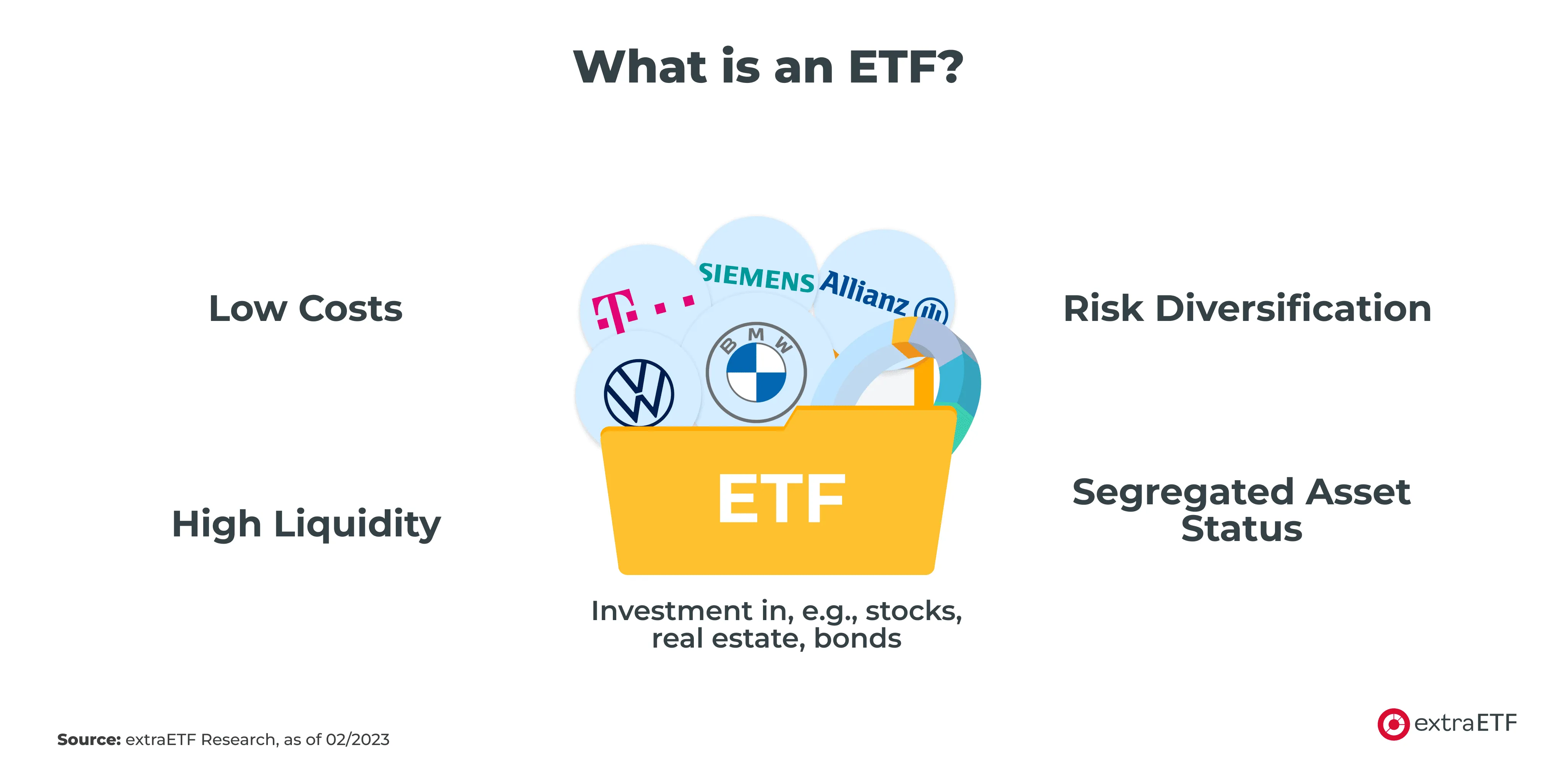
What is an ETF?
ETFs (Exchange-Traded Funds) are index funds traded on the stock exchange that allow investors to hold a broadly diversified portfolio of assets such as shares, property or bonds. Like shares, ETFs are traded on the stock exchange and, if the issuer becomes insolvent, offer protection as separate investment funds.
ETFs are passively managed funds that seek to track the performance of a specific index, such as the MSCI World Index. This makes them highly transparent, and because they do not need active fund management, they are significantly cheaper than actively managed funds. ETF shares can be bought and sold on the stock exchange during trading hours, making them a liquid investment vehicle.
Investors can significantly reduce the risk associated with ETFs by choosing a long-term investment strategy before they invest and ensuring broad, global diversification of their ETF holdings.
What is an ETC?
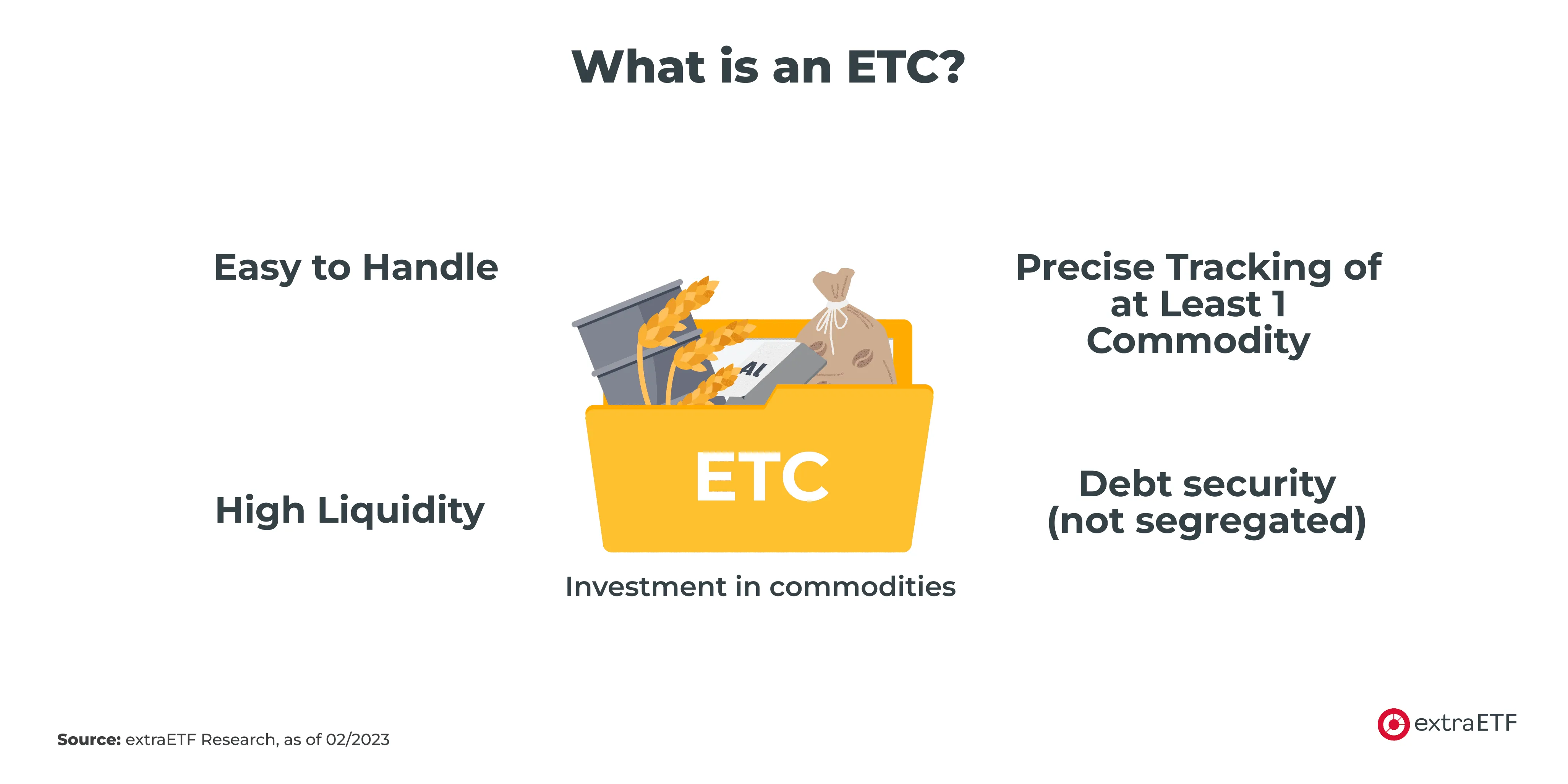
ETCs (Exchange-Traded Commodities) are exchange-traded securities that function similarly to ETFs. ETCs allow investors to invest directly in commodities such as precious metals, agricultural products or energy commodities.
They are debt securities. As such, ETCs are subject to issuer risk, among other risks, since – unlike ETFs – they are not separate investment funds. Investors therefore risk losing all or part of their money if the issuer becomes insolvent.
For example, ETCs can be used to invest in gold and other commodities. An ETC may, for instance, be linked to the price of gold and track its value. Gold ETCs can be physically backed, which gives investors direct exposure to the metal without having to buy or store it themselves. ETCs can also track prices using futures contracts.
ETC shares can be bought and sold on the stock exchange during trading hours, which, like ETFs, makes them a liquid investment vehicle.
Different Ways of Backing ETCs
Because ETCs are not segregated funds and carry issuer risk, investors may lose all or part of their capital if the issuer becomes insolvent.
To reduce issuer risk, however, these debt securities are usually secured with additional collateral. There are three types of collateral:

ETFs and ETCs sound almost the same, but there are key differences between them
What is the difference between ETFs and ETCs?
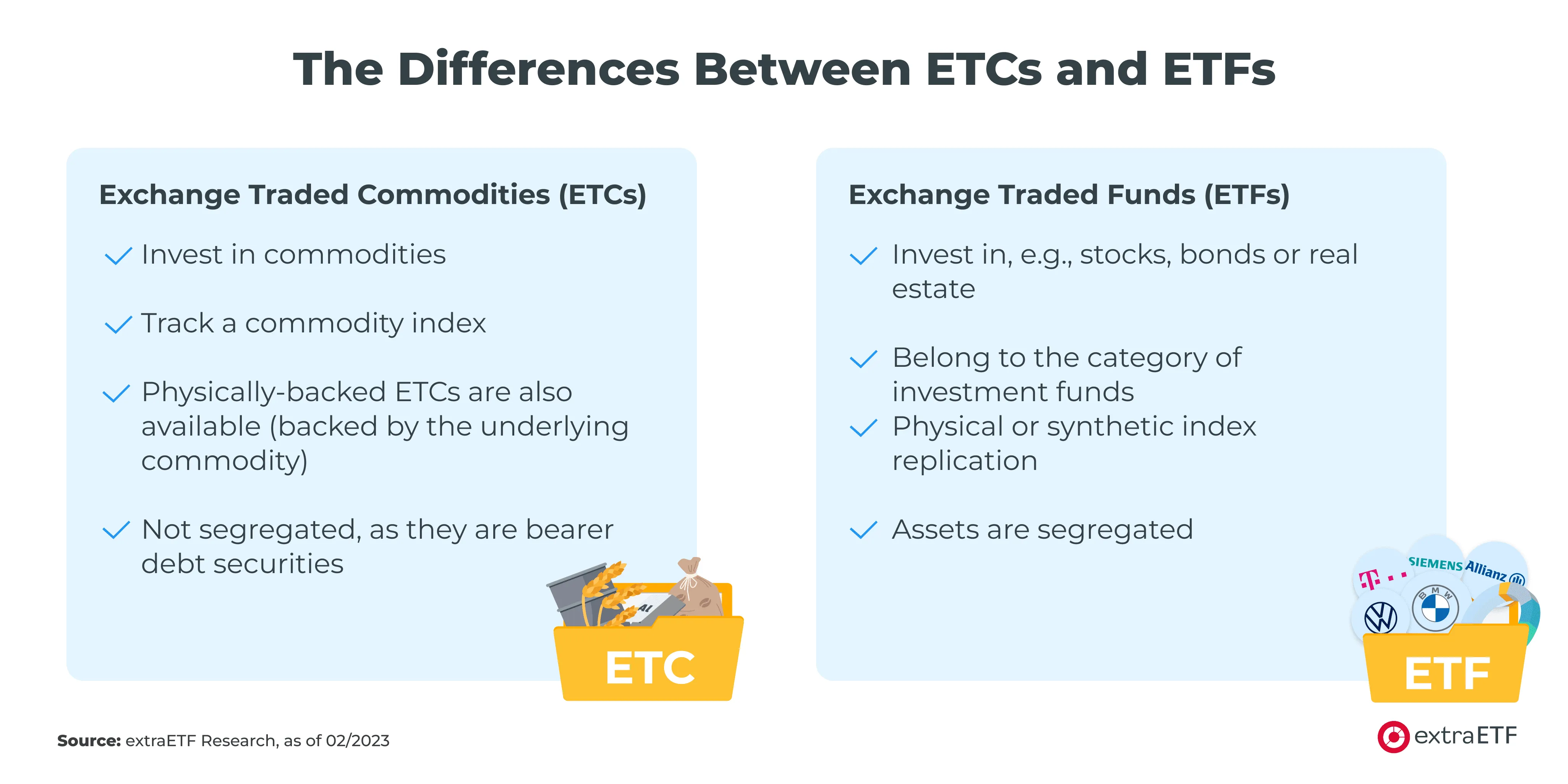
The biggest difference between ETFs and ETCs is that ETCs take the legal form of a perpetual bond, while ETFs, as segregated funds, offer greater security. This means that if the issuer becomes insolvent, ETC investors risk losing all or part of their money. In addition, the costs associated with ETFs can sometimes be slightly lower than those of ETCs.
ETFs and ETCs work in a very similar way, but ETFs are passive, exchange-traded funds that track an underlying index. They give investors access to various asset classes, such as shares, property or bonds. However, ETFs must offer a minimum level of diversification, so unlike some ETCs, they cannot be tied to a single asset.
ETCs, by contrast, track the price performance of commodities, either individually or through a commodity index. These include precious metals such as gold and silver, agricultural commodities such as corn and wheat, and other raw materials.
Many investors opt for regular ETF investing. However, it is also possible to invest in ETCs through a regular investment plan.
ETFs for Individual Commodities and Precious Metals
Some ETFs allow investors to invest in commodity indices. However, under UCITS rules, ETFs must always offer a minimum level of diversification, so they cannot track the performance of a single commodity or precious metal. Investors who want exposure to an individual commodity can use ETCs instead, which you can find with our ETF search tool.
Join the extraETF community
Explore the world of ETFs and make informed investment decisions.
- Find ETFs that match your criteria with our ETF Search.
- Compare costs, performance, and risk side by side.
- Save your favourites to a watchlist and receive price alerts.
- Explore detailed ETF profiles with key metrics and holdings.
Commodity ETCs Based on Futures
Investors who want exposure to natural gas, oil or agricultural commodities can do so through ETCs based on futures contracts. The reason is that commodity markets work differently from financial markets. Some commodities, such as corn, are perishable, which affects how they are traded, and storage costs and market expectations also play a role.
A futures contract is an agreement to deliver a commodity on a fixed date at a fixed price.
The contract price is the price at which the commodity will be delivered on the delivery date. The contract also sets out the quantity, date and quality precisely. This makes futures useful for commodity producers and other players in the agricultural sector, as they can lock in a fixed price for the future. Financial investors, however, are generally not interested in taking physical delivery of a commodity; they want to profit from price movements.
Because futures contracts have a limited term, they must be “rolled”. This involves selling the contract at the end of its term and immediately buying a new one. The ETC provider handles this on investors’ behalf, but it can result in roll gains or roll losses, as different prices may apply when selling and buying the contracts.
Conclusion: ETFs vs. ETCs – Here's How They Differ
ETFs and ETCs are both transparent, low-cost and flexible investment products that can enhance portfolio diversification – even across different asset classes when used together. ETFs can, for example, track shares, bonds or property and must hold multiple securities. ETCs, on the other hand, are linked to the performance of one or more commodities, such as industrial or precious metals, energy or agricultural products.
The biggest difference between ETFs and ETCs, however, lies in issuer risk. Because ETFs are segregated funds, they offer better protection than ETCs, which are debt securities. If the issuer becomes insolvent, ETC investors risk losing all or part of their money, so they should pay particular attention to the issuer’s creditworthiness.
Despite these differences, ETFs and ETCs can complement each other in a broadly diversified portfolio, depending on the specific products, your investment strategy and your investment horizon. Whichever ETFs or ETCs you choose, a portfolio tracking tool can help you keep track of your investments at all times.
