



What are sustainable investments?
Green, Eco-Friendly, and Ethical Investments
Sustainable investments offer the chance not only to grow your wealth but also to drive social and environmental change. But how can you make sure your money is invested sustainably? This guide explains how.
This article gives a comprehensive overview of sustainable investments and shows how anyone can help protect the environment and the climate through considered investment decisions.
The essentials in brief: Sustainable Investments at a Glance
Sustainable investing: An investment that generates a financial return while also promoting positive environmental, social and governance outcomes (ESG criteria).
Impact investing & SRI: Impact investing and SRI (Socially Responsible Investing) offer targeted opportunities for investors who are committed to sustainability.
Variety of sustainable investments: Sustainable options range from current accounts and savings products to funds and ETFs.
Investment strategies: Sustainable investment strategies let you build a diversified portfolio that reflects your financial goals and your values. Whether you are cautious or comfortable taking risks, there are sustainable options to suit you.

Find and compare thousands of ETFs. Use powerful filters, detailed analytics, and independent data to discover the right ETF for your portfolio.
Definition: Understanding Sustainable Investments
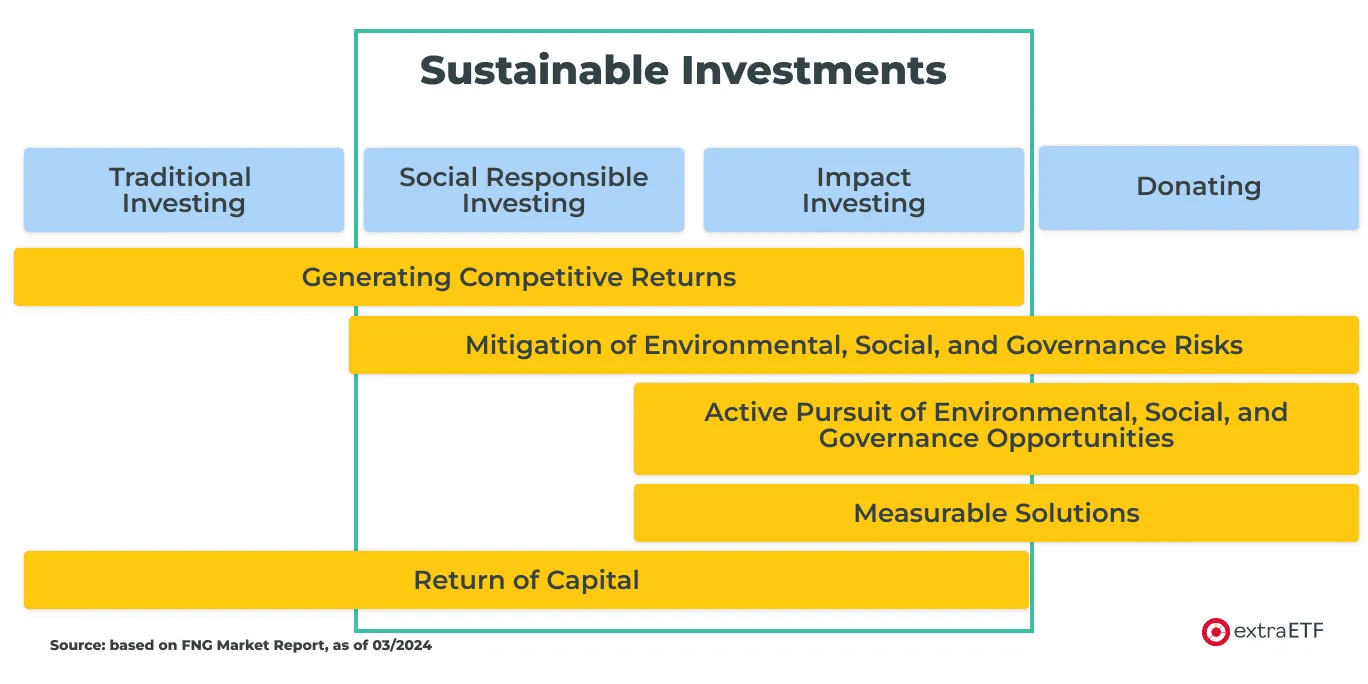
Sustainable investing means investing in a way that generates a financial return while also benefiting the environment, society and corporate governance. It takes into account a range of factors beyond traditional financial metrics.
In short, sustainable investments let you earn a return while benefiting society and the environment.
What sustainable investment strategies are available?
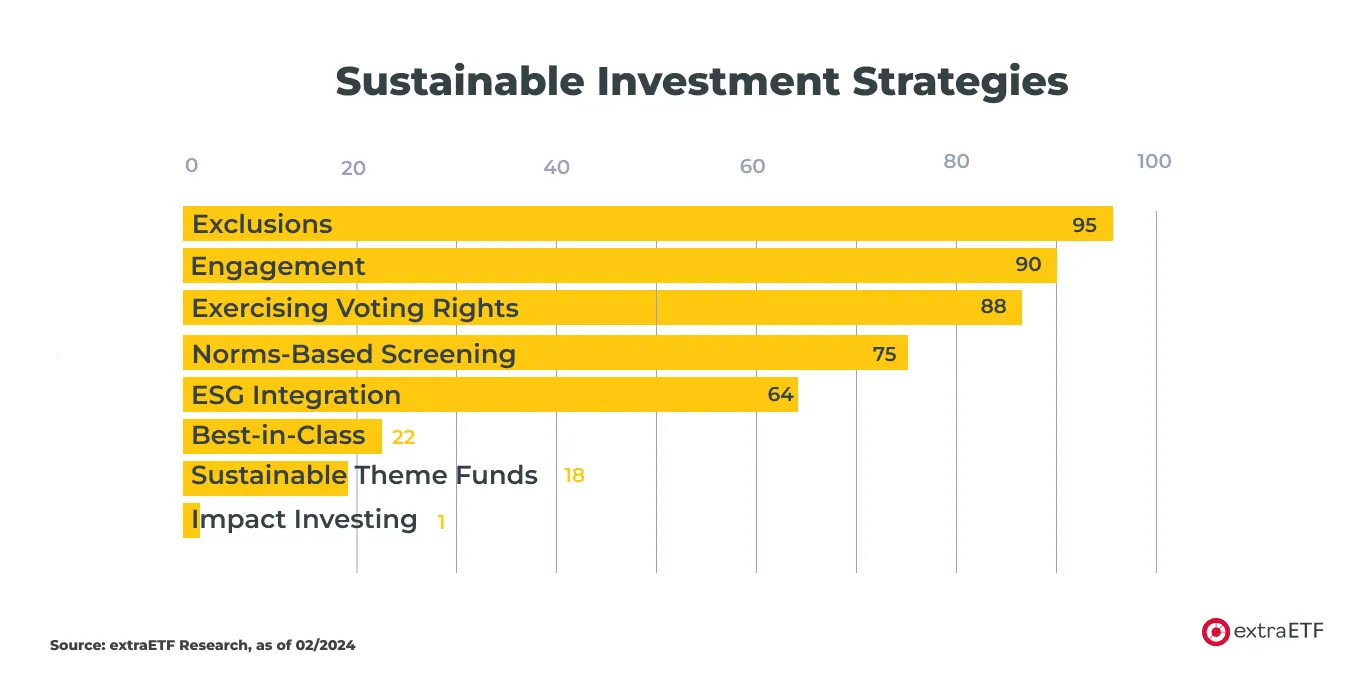
There are several ways to make your portfolio more sustainable, creating social and environmental value as well as financial value. Common strategies include:
- Impact investing: This approach focuses on achieving a measurable, positive impact on social or environmental goals.
- ESG integration: Environmental, social and governance factors are built into investment decisions.
- Exclusion strategy: Certain industries or practices considered harmful – such as fossil fuels or weapons production – are excluded from the investment universe.
- Best-in-class approach: Investors choose companies that lead their industry on sustainability criteria.
- Microfinance: By providing small loans to entrepreneurs and businesses in developing countries, investors can contribute to economic development while helping to combat poverty.
- Thematic investing: This strategy focuses on specific projects, themes or sectors that contribute directly to a more sustainable future.
Here, you'll learn how to invest sustainably

Which companies are excluded from sustainable investing?
Excluding certain industries or companies is an essential part of many sustainable investment strategies. Sectors seen as problematic from an ethical or environmental perspective are typically left out.
Common exclusions include:
- Nuclear power and fossil fuels: Because of the long-term environmental and health risks linked to their extraction and use, sustainable strategies often avoid these energy sectors.
- Weapons: Companies involved in the manufacture or trade of weapons and military equipment are avoided because of ethical concerns about fuelling conflict and violence.
- Tobacco and alcohol: These industries often appear on exclusion lists because their products harm health and raise social concerns.
- Gambling: Because of its negative social impact, including gambling addiction, sustainable investment strategies often exclude this sector.
BNP Paribas Asset Management offers a range of sustainable ETFs that apply the exclusion criteria mentioned above. Here are a few examples that may fit these approaches:
- BNP Paribas Easy Low Carbon 100 Europe UCITS ETF: This ETF focuses on companies in Europe that have lower carbon emissions compared with the market average, thereby excluding companies that rely heavily on fossil fuels.
- BNP Paribas Easy ESG Euro Corporate Bond UCITS ETF: An ETF that invests in euro-denominated corporate bonds while applying strict ESG (Environmental, Social, Governance) criteria. Companies from controversial sectors such as tobacco, weapons, or fossil fuels are excluded.
- BNP Paribas Easy ECPI Global ESG Blue Economy UCITS ETF: This fund invests in companies worldwide that contribute to the so-called “blue economy,” meaning the sustainable management of marine resources. Companies with a negative environmental impact or involvement in controversial business areas are excluded.
Join the extraETF community
Explore the world of ETFs and make informed investment decisions.
- Find ETFs that match your criteria with our ETF Search.
- Compare costs, performance, and risk side by side.
- Save your favourites to a watchlist and receive price alerts.
- Explore detailed ETF profiles with key metrics and holdings.
Practical Tips for Sustainable Investing
Whether you’re saving for retirement, building wealth, or simply deciding where to park your cash – there’s a growing range of options for sustainable investing.
For example, you can invest in funds or ETFs that prioritise companies with strong environmental, social and governance (ESG) standards, or invest directly in green bonds and sustainable projects, supporting innovative solutions to the most pressing challenges of our time. Banking with an ethical bank can also help ensure your money supports positive social and environmental initiatives rather than industries that contradict your values. Sustainable investing shows that financial returns and contributing to a better world need not be mutually exclusive – they can go hand in hand.
- Use sustainable current accounts: For everyday transactions, many banks offer green current accounts that are managed according to ethical and environmental criteria.
- Invest in green savings products: For short- to medium-term investments, sustainable savings products are a good option, as they combine security with ethical considerations.
- Choose sustainable funds and ETFs: For long-term wealth building, sustainable funds and ETFs that invest in a wide range of responsibly managed companies are a good choice.
- Evaluate offers critically: Not every product advertised as sustainable delivers on its promises. Use independent reviews and advice to assess the sustainability of investment products.
The Impact of Sustainable Investments
Sustainable investments are designed to let you invest responsibly while helping to tackle global challenges such as climate change, social injustice and corruption.
In addition, sustainability is increasingly viewed as an indicator of future economic success. Companies that invest in sustainable practices are considered better equipped to handle future risks and often have a more loyal customer base. This can show up in their share prices and in steadier financial performance.
By demanding sustainable investment products, private and institutional investors help to build a more sustainable economy. By deliberately choosing investments that deliver social and environmental returns as well as financial ones, they send important signals to the market, which can motivate companies to make their business models more sustainable.

Sustainable Investments as an Investment Trend
How is the impact of sustainable investments measured?
To judge how effectively investments support sustainable development, it is crucial to measure the impact of sustainable investment strategies.
This is often called “impact measurement” and can take various forms:
- ESG reporting: Companies report on their performance on environmental (E), social (S) and governance (G) issues. Indicators can include carbon footprint, workforce diversity or anti-corruption measures.
- SDG-aligned reporting: This shows how investments contribute to the individual UN Sustainable Development Goals (SDGs), from poverty reduction to climate action.
- Sustainability ratings and scores: Various providers offer ratings based on ESG criteria, which help investors compare the sustainability of companies.
- Positive and negative screening: This method excludes investments that fail to meet certain ESG criteria (negative screening) or favours those that stand out on them (positive screening).
- Impact investing metrics: Specific metrics measure social and environmental impact directly, such as the number of jobs a project creates or the greenhouse gas emissions it avoids.
- ESG integration: This examines how far ESG factors are built into financial analysis and portfolio management, showing how sustainable the strategy really is.
Transparency is essential for effective measurement. Sustainable investors should therefore prioritise clear, understandable reports that set out how data was collected, which metrics were chosen and what the sustainability efforts achieved.
What is the difference between green, eco-friendly and sustainable investments?
The difference between green, eco-friendly and sustainable investments lies in their focus and scope. Green investments focus primarily on environmental aspects, particularly those that promote environmental protection, such as renewable energy. Eco-friendly investments take a broader approach, covering natural resources and biodiversity as well as environmental protection. Sustainable investments take the broadest view, considering environmental, social and governance (ESG) criteria to achieve long-term value growth and positive social impact.
What about ethical investments?
Ethical investing uses moral and values-based criteria to select investments. It is guided by investors’ individual ethical principles and often excludes companies and industries considered harmful to people or the environment, such as weapons manufacturing, the tobacco industry or companies involved in serious labour rights violations.
8 Myths About Sustainable Investing Debunked
Sustainable investing is surrounded by myths and misunderstandings. Here, we debunk the most common ones and highlight one often-overlooked aspect.
Conclusion: The Power of Sustainable Investments
Sustainable investing is not only about securing your financial future, but also about actively contributing to a greener, fairer world. It enables you to use your capital responsibly while driving positive change.
With a wide range of sustainable financial products available and ESG criteria growing in importance, there are numerous opportunities to align your investments with your personal values while still aiming for solid financial returns.
We're here to answer any other questions you may have about sustainable investing
- Sustainable Investments at a Glance
- Definition: Understanding Sustainable Investments
- What sustainable investment strategies are available?
- Here, you'll learn how to invest sustainably
- Which companies are excluded from sustainable investing?
- Practical Tips for Sustainable Investing
- The Impact of Sustainable Investments
- How is the impact of sustainable investments measured?
- What is the difference between green, eco-friendly and sustainable investments?
- What about ethical investments?
- 8 Myths About Sustainable Investing Debunked
- The Power of Sustainable Investments
- We're here to answer any other questions you may have about sustainable investing