What Is an Investment Account?
Costs, security, and how to choose the right provider

An investment account is an account that holds and lets you trade securities such as shares, bonds, funds and ETFs. It is an essential tool for investors who want to diversify their portfolios across a range of securities.
You can open an investment account with a high-street bank, an online bank or a broker. It offers a secure, convenient way to buy and sell securities, and is the starting point for anyone who wants to invest in the stock market.
This guide explains how an investment account works and what to look for when choosing one.

The essentials in brief: Everything You Need to Know About Your Investment Account at a Glance
Definition: Anyone who wants to buy shares, bonds or ETFs needs an investment account. Without one, you cannot access the stock market.
Experienced investors: Customers who already know what they want to buy usually choose a low-cost online bank or broker.
Ideal for saving: An increasing number of online banks and brokers offer regular ETF investing free of charge, some with a minimum as low as £1.
It's easy to go digital: You can open an investment account online from your computer or smartphone, thanks to video identity verification.

Find and compare thousands of ETFs. Use powerful filters, detailed analytics, and independent data to discover the right ETF for your portfolio.
What is an investment account?
An investment account is used to hold securities such as shares, bonds, funds or ETFs. Just as you need a current account for everyday transactions such as receiving your pay and paying rent, you need an investment account for all stock market transactions. It lets you trade securities and keep them safe. Without one, you can’t participate in the stock market, and so can’t trade ETFs or other securities. That’s why it’s important to choose the right investment account.
Why should you open an investment account?
There are several reasons to open an investment account. The most important is that it allows you to invest in securities such as shares, ETFs, bonds or funds. Ideally, these securities will increase in value, so that with the right choices you can build wealth over time. The securities in your account can also generate a regular income in the form of dividends, distributions or interest.
Reasons for opening an investment account include:
- Investing in shares, ETFs, bonds or funds
- Secure custody of your securities
- Automatic crediting of distributions and dividends
- Clear reporting of gains and income for your tax return
Join the extraETF community

Explore the world of ETFs and make informed investment decisions.
- Find ETFs that match your criteria with our ETF Search.
- Compare costs, performance, and risk side by side.
- Save your favourites to a watchlist and receive price alerts.
- Explore detailed ETF profiles with key metrics and holdings.
Broker, direct bank, or branch: Where can I open an investment account?
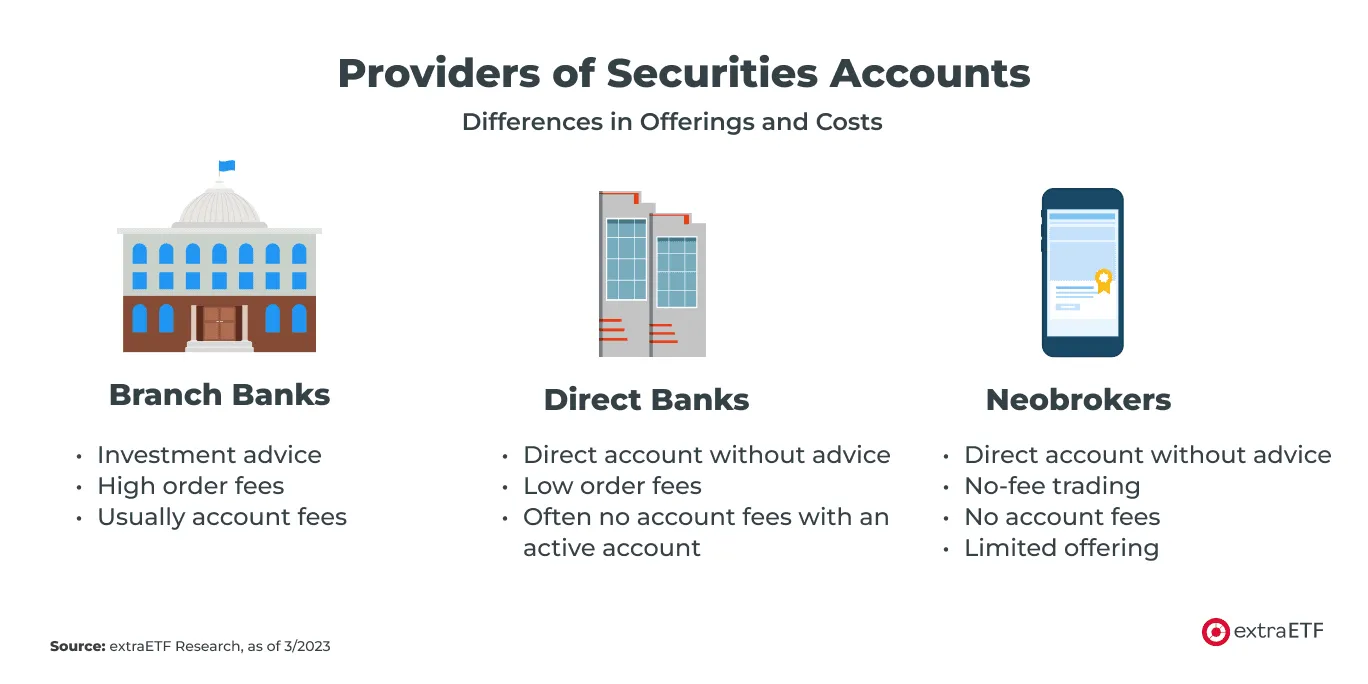
You can open an investment account at almost any high-street bank, as well as at online banks and online brokers.
Investors who already know what they want to buy, or who do not want advice, are likely to be best served by an online bank or a neobroker.
What Do Online Banks Offer?
Online banks and brokers offer significantly better terms for trading securities than high-street banks. Thanks to marketing partnerships with ETF providers, many let customers buy certain ETFs for free or invest in them through a regular ETF investment plan. They are accessible around the clock by computer or app, and many offer webinars and detailed guides on their websites to help you learn about investing.
What Are the Pros and Cons of High-Street Banks?
If you keep your current account at your local high-street bank and want all your finances in one place, expect higher fees for buying and selling securities, and usually custody fees for holding them. In return, high-street banks also offer investment advice.
However, advice is often not available for ETFs, because banks earn very little from these low-cost products – they simply collect the buy and sell fees, as they would on an ordinary share order.
Tip: If you want to hold your investment account with your main bank, check whether you can manage it online and place orders yourself. This usually saves money.
What are the differences between online banks?
There are also differences between direct banks and neobrokers. These differences mainly concern the range of investment options. Not all providers offer every type of security; for example, regular ETF investing is not available everywhere. If you also want to trade other securities, such as shares or bonds on UK and overseas exchanges, review the offering and terms carefully.
Anyone who wants both an investment account and a current account online with a single provider will find what they’re looking for at the major direct banks, but not at neobrokers.
Good to know: Free current accounts are becoming rarer, and some providers now charge fees even for investment accounts. However, if you hold both a current account and an investment account with the same bank and regularly trade securities or invest through a regular ETF investment plan, you often pay neither fee.

Your Ticket to the World of Securities
 Markus Jordan, Founder of extraETF.com
How much does an investment account cost?
The cost of an investment account varies by provider. Some charge a fixed fee, such as £24 per year, while others apply a variable account fee.
At direct banks and neobrokers, customers who invest regularly or trade securities often pay no additional account fees. If you do not use your account actively, however, you may face extra costs.
In addition to account fees, you should consider the cost of order execution. For an order of £5,000, this ranges from £1 to £50. Trading securities is generally much cheaper at online banks and neobrokers than at a high-street bank, even when using the latter’s online services.
However, there are now significant differences even among online providers. As a rule of thumb, direct banks with a broad range of services are more expensive than specialist neobrokers. Use our broker comparison service to find the right provider.
Tip: It is worth reviewing your provider’s offering from time to time. Competition is fierce, and switching investment accounts can often save you a lot of money.

Step-by-Step Guide to Opening a Investment Account
The process for opening an investment account varies by provider, but certain steps are the same everywhere.
Choose a bank: Select the provider that best fits your investment strategy.
Start opening an account: Now you need to go through the bank's account opening process. Enter your personal information there.
Knowledge of Securities: When opening a investment account, you must indicate your level of experience in the securities market. Beginners are not permitted to trade certain securities.
Identification: Now you need to verify your identity. You can do this via Video-Ident or Post-Ident. With smartphone-only banks, opening a investment account is particularly quick and easy.
Depositing Funds: Once you've opened your investment account, you'll be provided with your bank account information. You can now transfer funds to your clearing account.
How secure is an investment account?
An investment account and its linked cash account offer a high level of security, for the reasons outlined below.
- Securities: Securities held in an investment account belong to you. The provider holds them on your behalf, so you are entitled to have them returned if the provider goes bust.
- Cash: Cash balances in the linked account are generally protected by the FSCS up to £85,000 per person, per authorised firm.
Which broker does extraETF recommend?
Our broker comparison service analyses and tests the offerings of all major direct banks and neobrokers. The table below shows the providers with the best offerings, which combine attractive securities trading services with favourable terms.

Conclusion: Investment Account: The Foundation for Building Wealth
An investment account allows you to invest in securities such as shares, ETFs, bonds, funds and other financial instruments. It is therefore an important part of building wealth.
Before you open an investment account, carefully review the provider’s terms and conditions. Which securities can you trade, what are the order fees, and how much does it cost to hold them?
Important Questions About Your Investment Account

- Everything You Need to Know About Your Investment Account at a Glance
- What is an investment account?
- Why should you open an investment account?
- Broker, direct bank, or branch: Where can I open an investment account?
- How much does an investment account cost?
- Step-by-Step Guide to Opening a Investment Account
- How secure is an investment account?
- Which broker does extraETF recommend?
- Investment Account: The Foundation for Building Wealth
- Important Questions About Your Investment Account