ETF Fact Sheet Explained
Key Facts About an ETF at a Glance

An ETF fact sheet allows you to review the product details before purchasing an ETF. It contains the most important information about an ETF, such as costs, index details, and performance data.
The quality and scope of an ETF fact sheet vary among ETF providers. This is because, unlike a sales prospectus or the Key Investor Information Document (KIID), the content of a fact sheet is not required by law.
In this article, we explain how to read an ETF fact sheet and how to distinguish useful information from promotional content.

The essentials in brief: All About ETF Fact Sheets
Information: ETF fact sheets contain the most important information about an ETF. They provide investors with a quick overview.
Marketing Information: This fact sheet is a promotional communication from the ETF provider. It is therefore not legally binding on the issuer.
Not Standardized: The content of an ETF fact sheet is not standardized. However, for most issuers, it contains the same information.
Availability: ETF fact sheets can be downloaded from the providers' websites or from extraETF on an ETF's profile page.

Find and compare thousands of ETFs. Use powerful filters, detailed analytics, and independent data to discover the right ETF for your portfolio.
What is an ETF fact sheet?
An ETF fact sheet presents the most important facts about an ETF in a clear and concise manner. It is therefore a useful tool for evaluating an ETF and should definitely be read by every investor before investing in that ETF.
The ETF fact sheet contains information on the key details of an ETF. This may include, for example, the total expense ratio (TER), the fund’s launch date, or the method of distribution of earnings. In addition, the fact sheet usually includes information on the investment strategy and the weightings of the ETF’s components, such as those by country or region. The fact sheet also provides data on the ETF’s performance.
Is an ETF fact sheet legally binding?
The ETF fact sheet is not legally binding on the ETF provider. It constitutes non-binding marketing information. Corresponding notes to this effect can be found on every ETF fact sheet. Providers therefore have considerable leeway in designing a fact sheet. The documents that are legally binding for investment decisions are the Key Investor Information Document (KIID) or the official prospectus. These documents can be downloaded from the ETF profile pages on extraETF.com.
Join the extraETF community

Explore the world of ETFs and make informed investment decisions.
- Find ETFs that match your criteria with our ETF Search.
- Compare costs, performance, and risk side by side.
- Save your favourites to a watchlist and receive price alerts.
- Explore detailed ETF profiles with key metrics and holdings.
Read and Understand the ETF Fact Sheet
Below, we outline the key elements of a fact sheet. We explain where to find specific information and how investors should interpret it. As an example, we’ll use the fact sheet for the iShares Core MSCI World ETF, which can be downloaded by clicking the button below.
The Fact Sheet Header
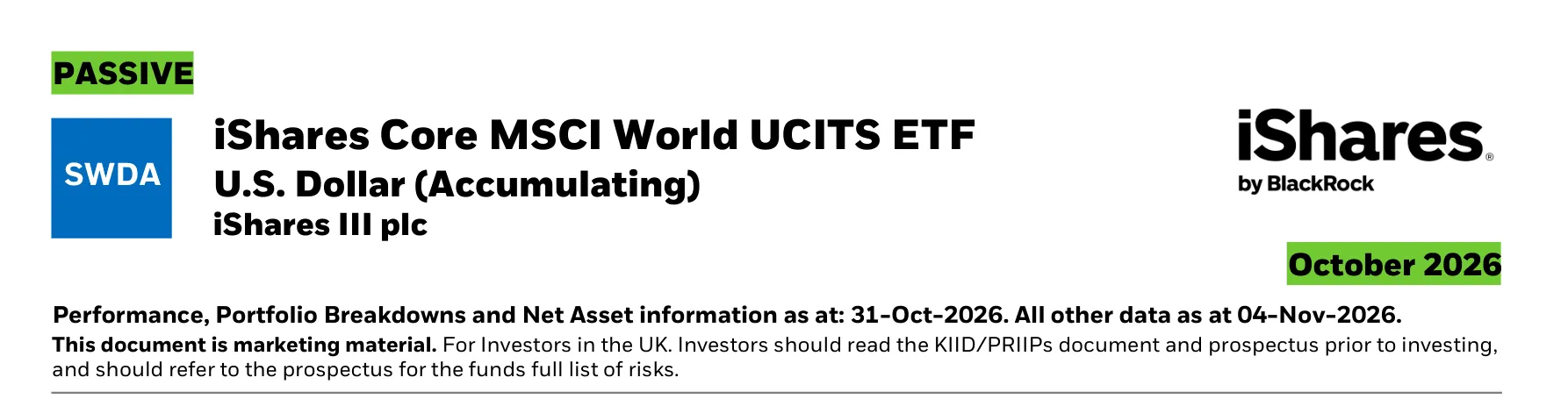
At the beginning of a fact sheet, basic information about the respective ETF is presented. For iShares, the ticker symbol EUNL – which is important for institutional clients – is highlighted in a blue box on the far left. Next to it is the full product name. The issuer’s logo is also usually found at the very top. The fact sheets differ very little in this regard. Below the header, a few lines describe the ETF’s investment strategy and often that of the underlying index as well. This information provides an initial indication of the market in which the ETF invests.
Key Fund Information
The next section contains the most important details about the ETF. The securities identification number (WKN) or the international securities identification number (ISIN) is important for purchasing the fund. Key comparative metrics include the total expense ratio (TER), the index tracked by the product, the distribution policy (distributing or accumulating), and the type of index tracking (physical or synthetic). Almost all issuers specify in the fact sheet the number of holdings in the benchmark index, the tracking accuracy (tracking error, tracking difference), and the volatility (value fluctuations).
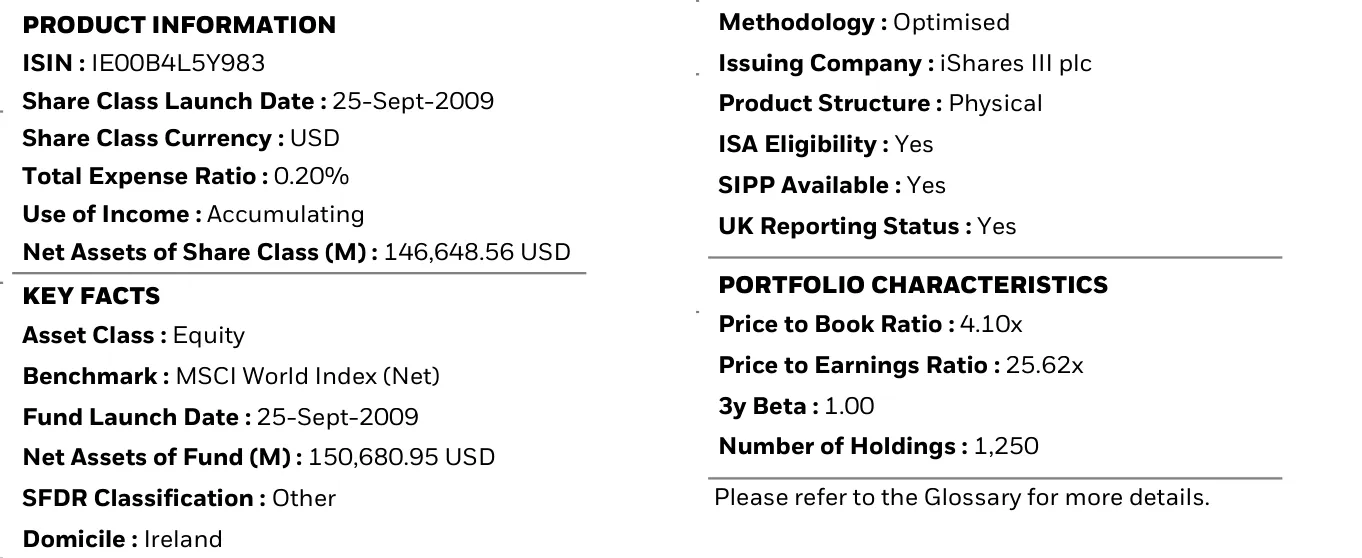
Investors should always pay particular attention to the fund’s assets under management. ETF products whose assets under management remain below £100 million several years after the fund’s launch are not profitable for the fund companies in the long run. In such cases, they are therefore often closed after a few years or merged with other similar products. As a general rule, therefore, investors should prefer ETFs with assets under management exceeding £100 million. If an ETF is actually at risk of being closed, the money is not lost. Investors are also informed of this well in advance.
Chart of ETF Performance
As is well known, statistics can be misleading. Investors should therefore not be blinded by charts in fact sheets that appear too good to be true. If the ETF was launched only recently, the chart often does not reflect actual performance but rather a back-tested historical projection, which should inherently be treated with caution. This is because, for new funds, the companies or index providers only perform a “hypothetical” back-calculation of how the portfolio would have performed in accordance with the respective investment strategy.
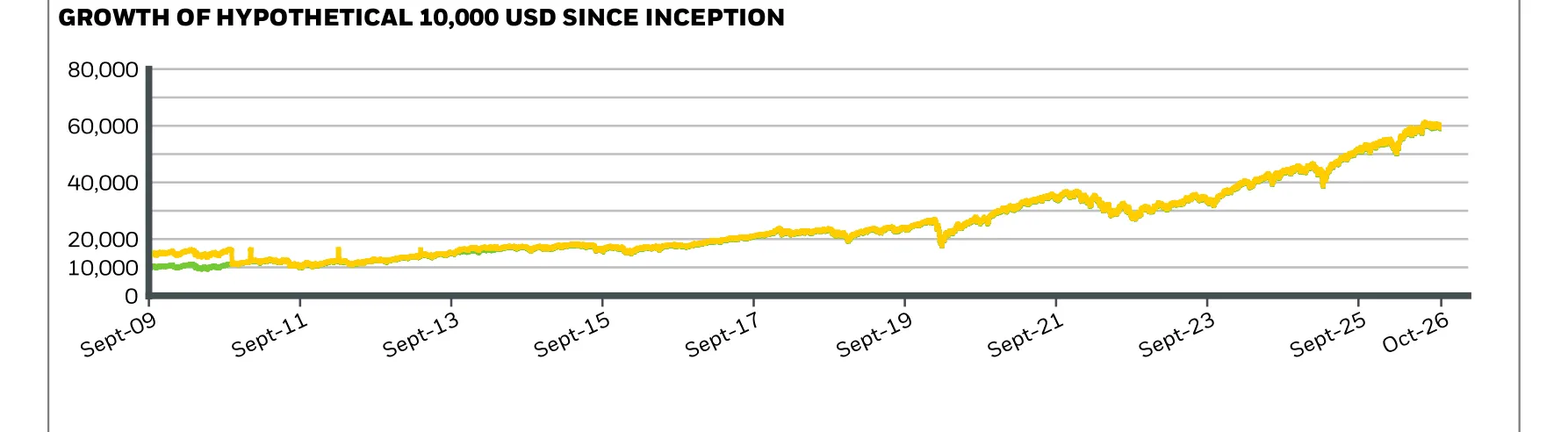
Past performance cannot, in any case, be easily extrapolated to the future. That is why almost every fact sheet includes disclaimers designed to protect the issuer (legally).
Example: “Past performance is not indicative of current or future results and is no guarantee of future returns.”
ETF Performance
Investors should be particularly cautious when return figures cover only individual years rather than the entire period. This is because performance may have been above average during that specific period. Therefore, investors should always review the return figures since the fund’s inception.
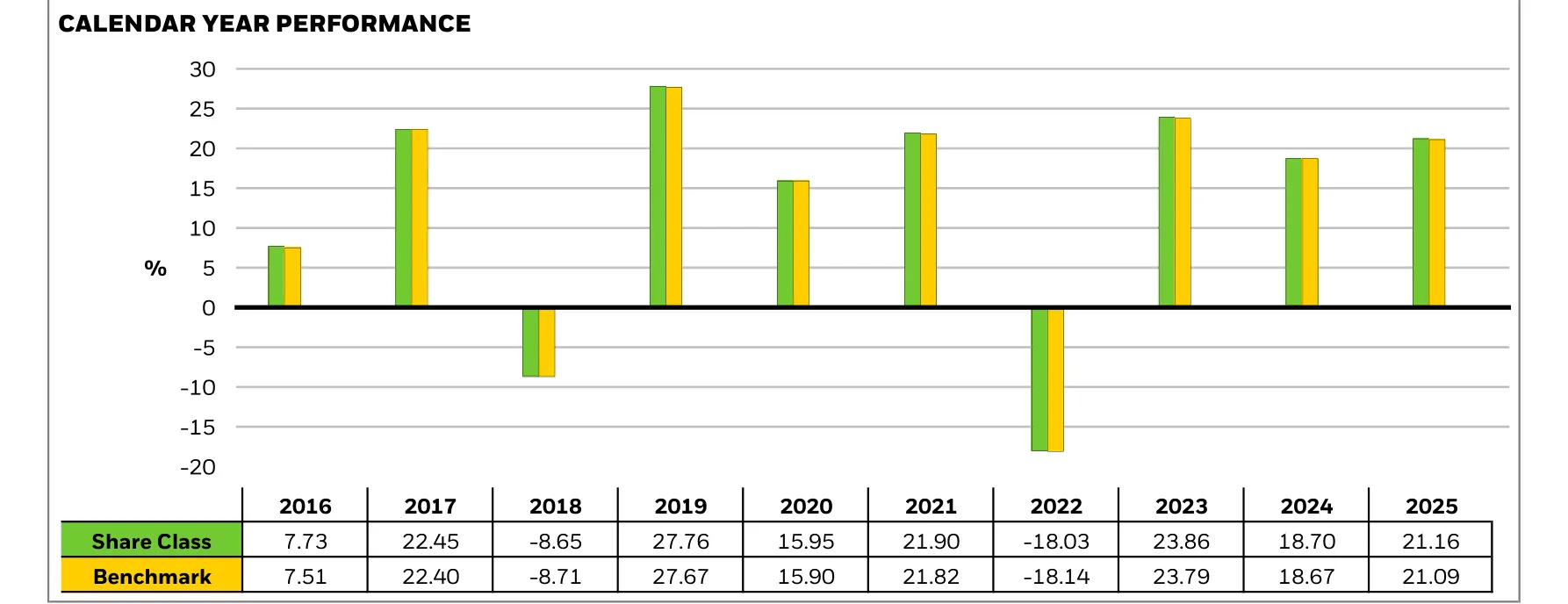
In most cases, however, the return figures are presented in great detail. For example, they include information on the return for a specific period as well as the annualized return since inception, for the current year, or over one, three, five, and ten years. Particularly comprehensive fact sheets also provide additional risk metrics, such as information on volatility or correlations with other asset classes.
Information on Weightings
This section provides a detailed breakdown of how the ETF’s investments are distributed across individual securities, sectors, regions, or countries. This section will be most useful to most investors, as it allows them to see exactly how their capital is ultimately invested. 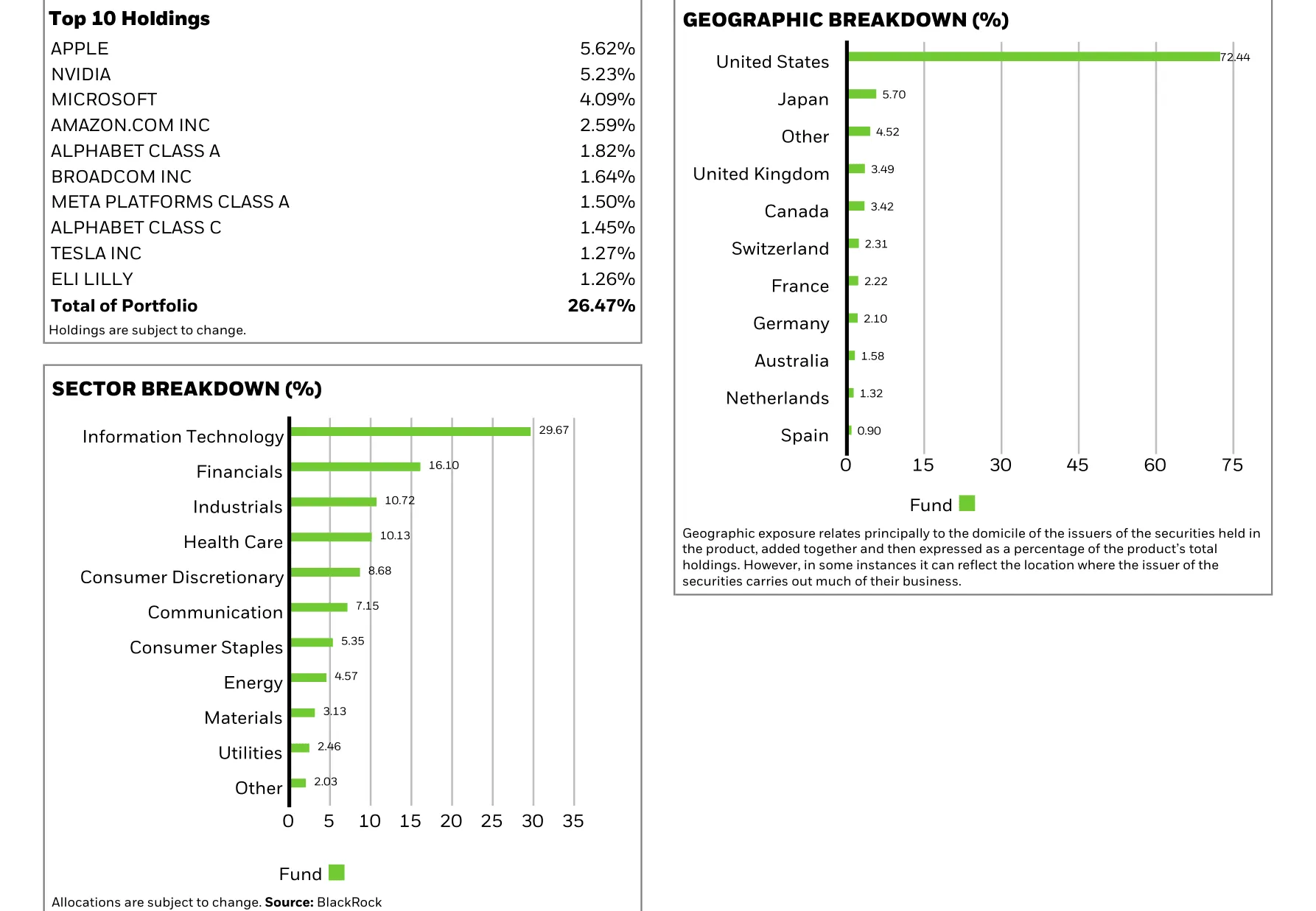
For bond ETFs, the weightings of the respective bond types, maturities, or credit ratings of the bonds held in the ETF are also often specified.

To choose the perfect ETF, it’s important to use complete and up-to-date data. extraETF provides comprehensive data that is essential for selecting ETFs. This data can be viewed using the ETF search function or on an ETF’s profile page.
Sustainability Information
Since 2021, ETF providers have been required by law to label their products according to a legally mandated classification system for sustainable products (the EU's Sustainable Finance Disclosure Regulation, or SFDR). This classification indicates whether and to what extent the ETF incorporates sustainable criteria into its investment strategy. Most providers now state this directly in the fact sheet's key facts, typically labelled "Article 8," "Article 9," or "Other."
Trading Information
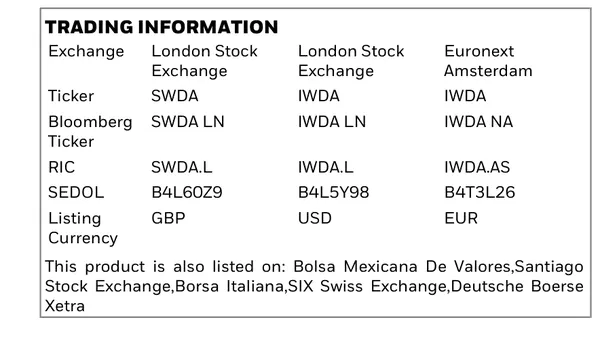
An ETF fact sheet often includes information on the ETF’s trading options. It specifies the stock exchange on which the ETF can be traded and lists the trading codes (ticker, Bloomberg ticker, RIC, SEDOL) that are particularly relevant for institutional investors.
Important Information / Disclaimer
At the end of a fact sheet, there is usually a section titled “Important Information” or “Important Notes,” but these aren’t actually that important for investors. Rather, the issuer uses this section to protect itself legally, and since the ETF fact sheet is ultimately a promotional document, it contains statements such as: “This fact sheet is not a personal solicitation to the recipient to make an investment decision, and no assessment has been made as to whether this investment is suitable for your individual needs and risk tolerance.”
Key Terms Explained in the ETF Fact Sheet
The ETF fact sheets contain many technical terms that may seem confusing at first glance. We have therefore compiled the most important terms in a glossary.
| Term | Explanation |
|---|---|
| Ticker | The ticker symbol allows the ETF to be identified without a doubt. The ticker is relevant for trading on the stock exchange. |
| WKN | WKN stands for Wertpapierkennnummer (Securities Identification Number). Many brokers use the six-digit WKN in their systems and securities statements. |
| ISIN | ISIN stands for “International Security Identification Number.” This number identifies securities in cross-border trading. |
| KIID | The “Key Investor Information Document” (KIID), or “Essential Investor Information” (WAI) in German, is the legally required product information sheet for ETFs. |
| Prospectus | The prospectus is the legally binding sales document for an ETF or fund. |
| Index | The index specifies which market segment the ETF ultimately tracks. It is responsible for the ETF’s price movements. |
| Tracking Method | An ETF’s index replication can be physical or synthetic. |
| Return | The return provides information on how the ETF has performed in past periods. The notation “p.a.” indicates the return per year. |
Where can I find the latest ETF fact sheets?
ETF fact sheets can be found on the websites of ETF providers. If you want to find ETF fact sheets from different providers with ease, your best bet is to use the extraETF website. There, you can download the current ETF fact sheet from an ETF’s profile page. This saves investors the hassle of having to search for the fact sheets on the various providers’ websites.

Conclusion: ETF fact sheets are an important guide
Before purchasing an ETF, investors should be sure to review the ETF’s fact sheet. ETF fact sheets provide a good initial overview of the product details and key metrics, such as the total expense ratio (TER), fund size, launch date, distribution policy, and tracking accuracy.
Websites specializing in ETFs, such as extraETF.com, offer a useful tool – the ETF search – to help with ETF selection.